

The Michelin tyre that never raced
Marc Márquez led the 2025 Thai Grand Prix and then gave it away. His front tyre pressure was too low, so he let his brother Álex through and tucked in behind him to bring it back up. Once he’d spent enough laps within the rules, Marc took the lead back and won. That same pattern has played out a few times in recent years.
Michelin built and tested a lighter front tyre designed to be less sensitive to changes in temperature and pressure, including when riders followed other bikes closely. It never raced. Piero Taramasso believes it could have changed the competitive order.
As Michelin nears the end of its 11-season stint as MotoGP’s control tyre supplier, its two-wheel competition manager spoke with MCNews.com.au at Phillip Island about why Michelin shelved the new front and why he still backs the minimum-pressure rule.
Why MotoGP’s tyre pressure rule is so contentious
Teams have to set their starting pressures before they know how the race will play out. Follow another bike closely, and the front gets less cooling air, so temperature and pressure can climb. Set the pressure for a race in traffic and a rider who breaks clear can find it too low. Start higher, and a rider stuck in traffic can have the opposite problem, with too much heat and less front grip.
The tyre has to meet its specified minimum for a required share of laps. A breach can change the result after the chequered flag. Pedro Acosta crossed the line third in the 2026 Grand Prix of the Americas Sprint and dropped to eighth after an eight-second tyre pressure penalty.
Piero Taramasso
“First thing is you have to understand that that rule is made for safety.”
Taramasso favours checking pressures on track because different motorcycles and riding styles put different demands on the tyres. Monitoring during the race lets teams choose a starting pressure to suit their rider and bike. He understands the frustration when a rider loses a podium after the race, but sees the minimum as a technical requirement that has to be enforced.
Pirelli will take over as MotoGP’s tyre supplier in 2027, and the FIM has confirmed the current pressure monitoring system will carry over.
What Michelin’s new front was meant to change
Michelin gave the prototype a larger profile and more internal volume to reduce swings in temperature and pressure. The new profile also gave the tyre a larger contact patch when the bike was leaned over.
At Sepang in 2025, Taramasso put the weight saving at about a kilogram. Some riders still found the larger front made the bike feel heavier to steer at first, something Taramasso believed teams could address through set-up.
Why Michelin shelved it
Riders tried the prototype at the September 2024 Misano test. Michelin deferred the planned 2025 debut to refine the tyre and give teams more time to test it. After another test at Aragón in June 2025, Michelin consulted riders, teams and Dorna before deciding to shelve it.
Taramasso said at Assen that most had favoured the new front tyre and that some teams had already found a setup that worked with it. The timing weighed against it. The grid would have had one season to adapt to the new Michelin front before switching to Pirelli.
Piero Taramasso
“We did all the conception, development, building, testing. And what we just missed, it was one season in the championship.”
“It was completely different, and we know that it will make a big difference in the hierarchy.”
Why the front tyre was under more strain
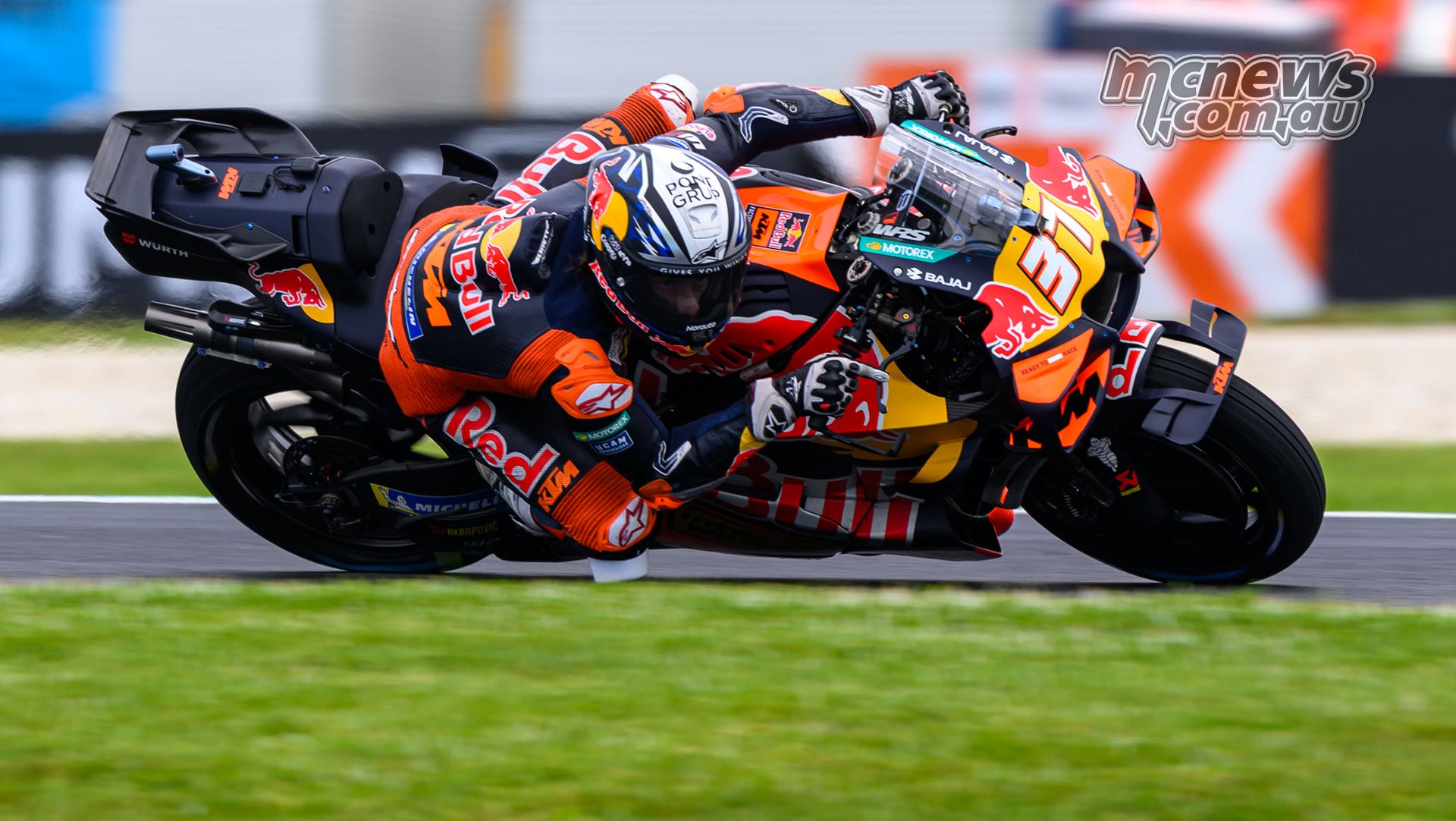
When Michelin returned to MotoGP in 2016, Taramasso said riders were braking later and harder than they had when Michelin left at the end of 2008. Aerodynamic load and ride-height devices then added progressively more and more to the demands on the front.

Piero Taramasso
“Basically, the temperature, it goes up, up, up, up, up. You overheat the front.”
“When you overheat the compound, you lose the grip, you lose the front.”
The tyres cannot rest anymore
Previously, under braking, the rear was generally lightly loaded or lifted from the ground. Under acceleration, the front could lift, and thus the front tyre would get a rest. With current ride-height devices, that rarely happens. Taramasso described those moments as chances for the tyres to breathe. Aerodynamics and systems that control the bike’s ride height have reduced those opportunities.
Piero Taramasso
“But now with the ride-height device, you always have a lot of load on the front, on the rear, in the turn. So the tyres cannot rest anymore.”
I’d given plenty of thought to the peak forces a MotoGP tyre has to withstand. Taramasso got me thinking about how long it now stays heavily loaded through a lap because of the ride-height devices and the aero. I hadn’t thought about that before, but my conversation with Piero made it clear just how much extra constant load recent developments were now putting through the tyres. As he said, there is now no chance for the tyre to ‘breathe’.
Taramasso said Michelin had been adapting its compounds, construction, materials and pressures to keep pace.
Piero Taramasso
“You increase the energy, and then you have this huge energy for all the time, for all the race.”
A lighter rear was also being developed
The front was one part of Michelin’s development work. Asked where the next gains might come from, Taramasso pointed to the rear.
Piero Taramasso
“We have the new front, and we were working on the new rear. Also, same philosophy as the front, light. So it was a light rear tyre with a soft casing for more performance, basically.”
Where could the shelved front go next?
Michelin takes over as WorldSBK’s control tyre supplier in 2027. Superbikes put different demands on their tyres, but Taramasso sees scope for ideas from the MotoGP front to carry over to a Superbike tyre, and that will be a tyre Michelin could also sell to the public. Watch this space…