

CFMOTO V4SR-RR
CFMOTO’s V4SR-RR has returned to EICMA with more detail on how the Chinese manufacturer intends to turn its 210-plus horsepower into lap times.
The headline engine and weight figures will be familiar to readers who followed our recent visit to CFMOTO headquarters. The latest announcement adds a clearer account of the independently controlled winglets, adjustable frame reinforcement, and component package surrounding that 997 cc V4.
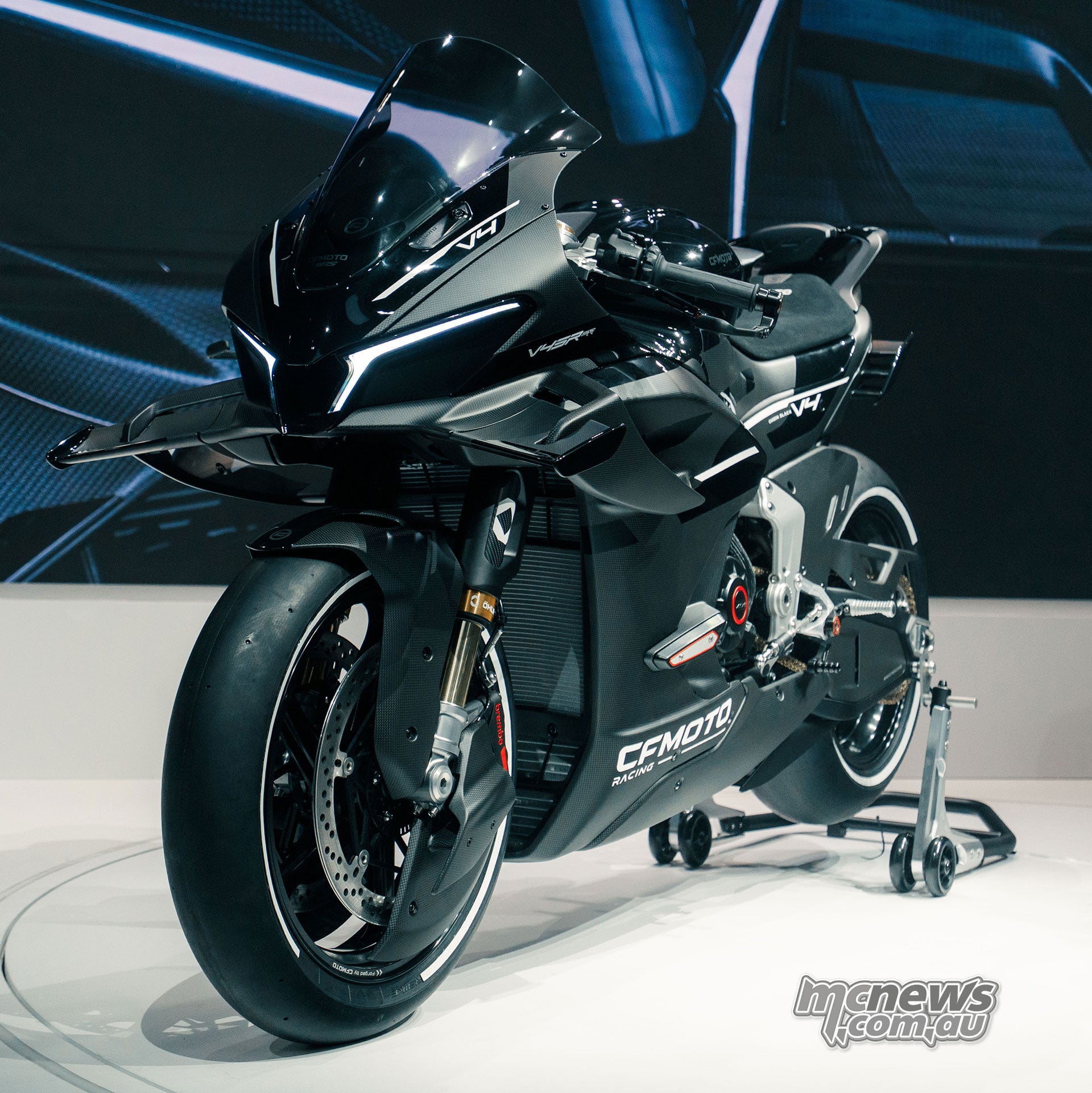
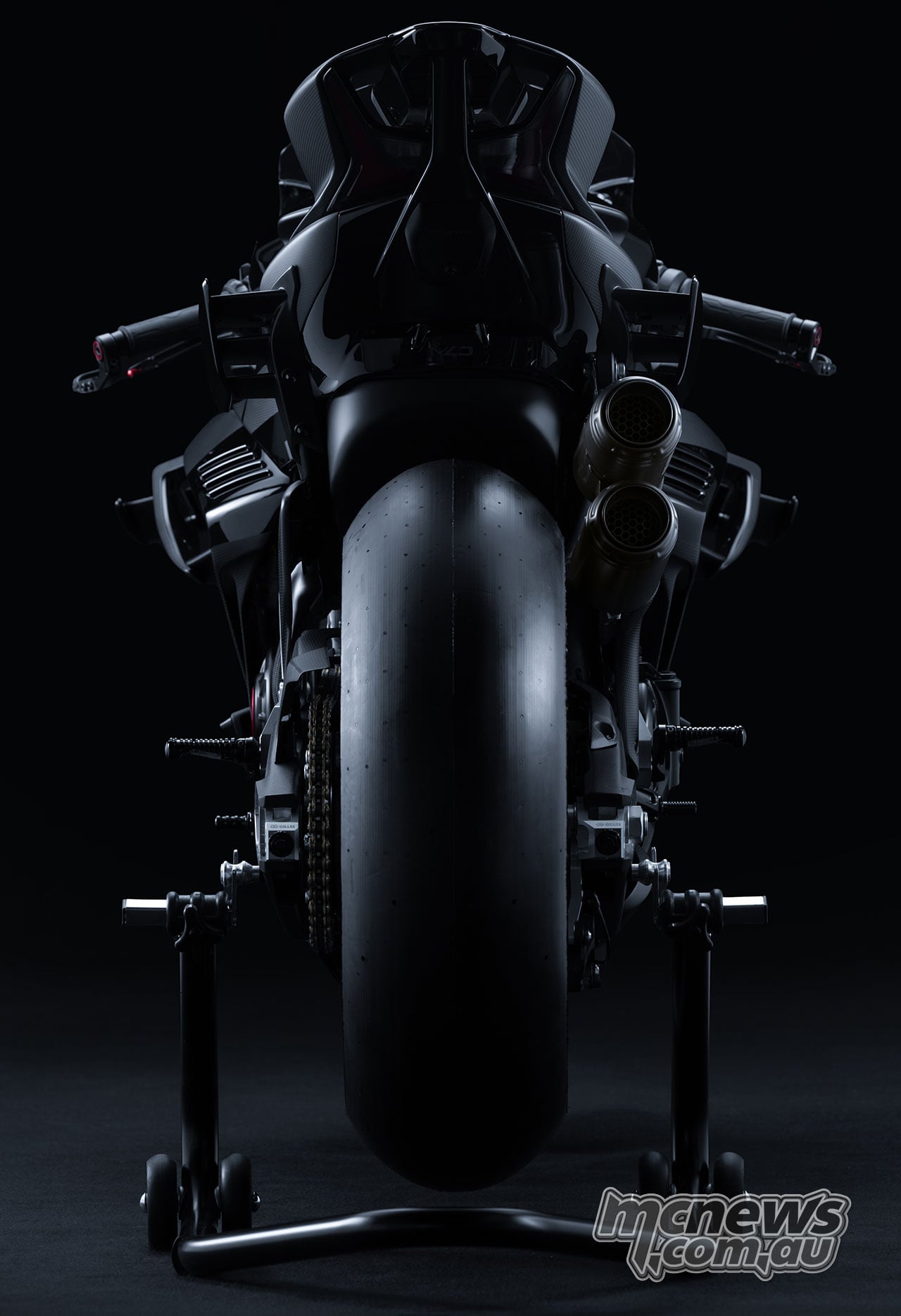
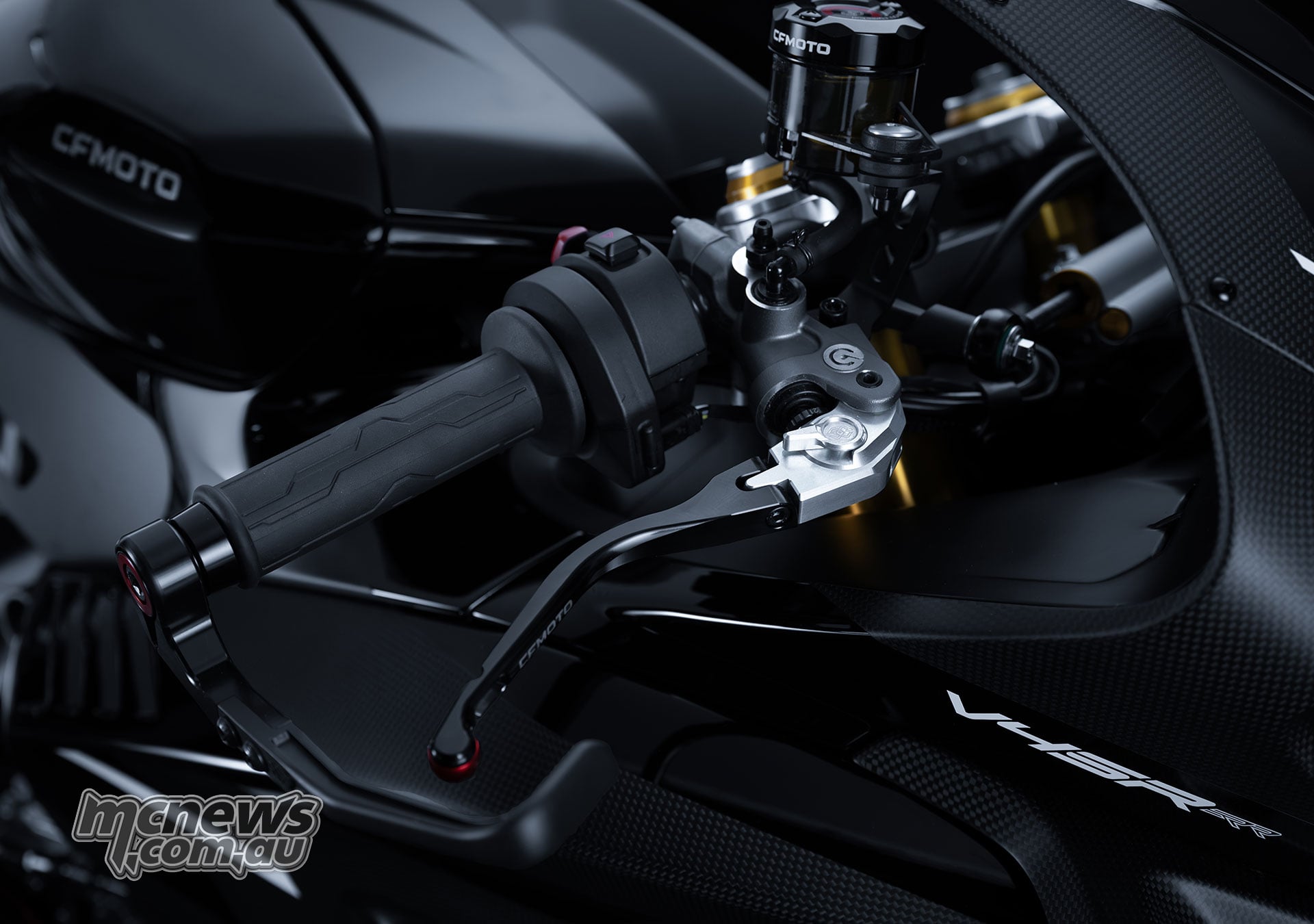
There is also a Carbon Black showbike, complete with extensive carbon-fibre bodywork and an STM dry slipper clutch. It provides a more extreme interpretation of the project, although CFMOTO explicitly describes it as non-road-homologated.
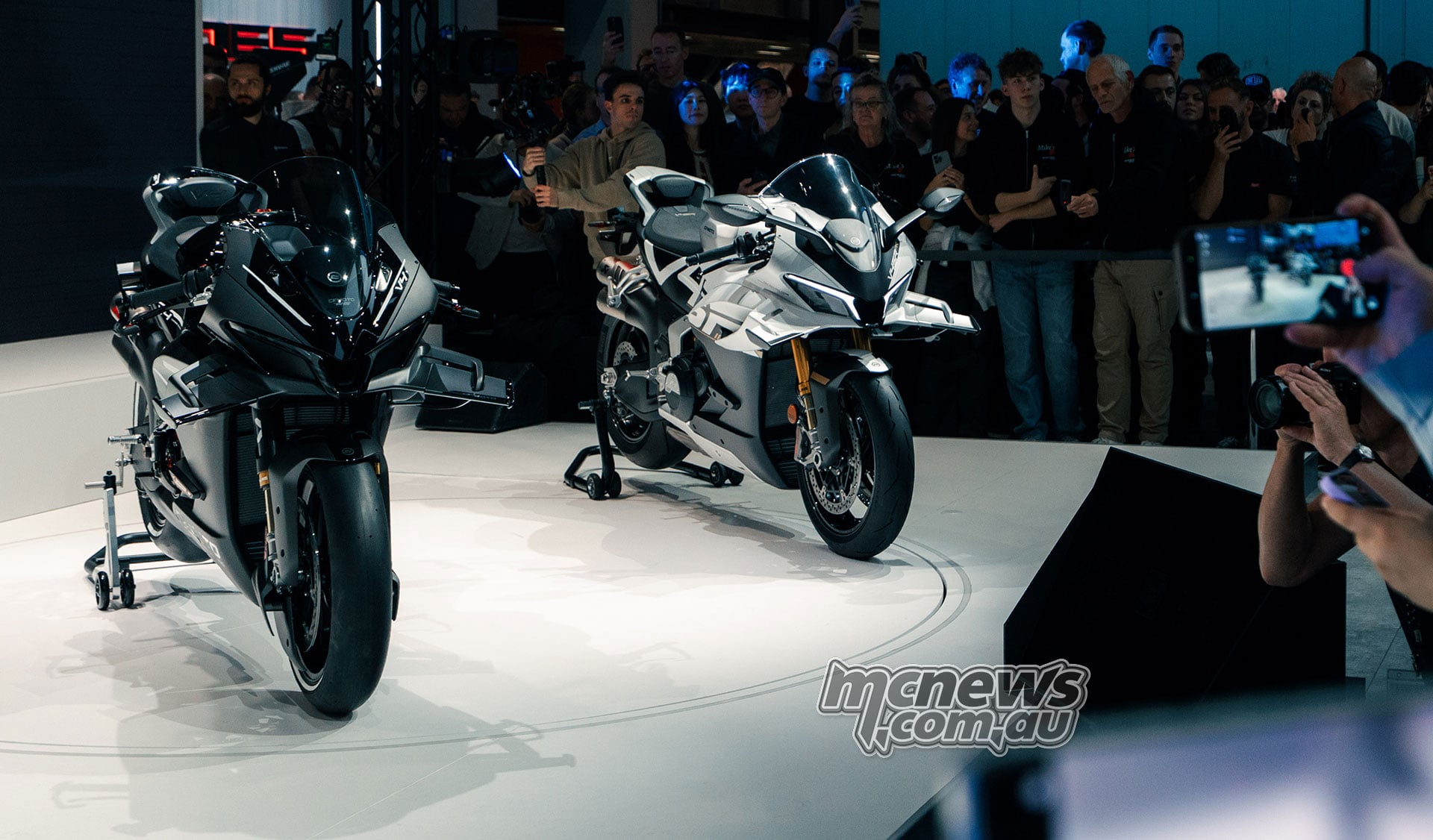
The V4 we saw taking shape in Hangzhou
First presented through CFMOTO’s Master of Speed project at EICMA in 2024, the V4SR-RR uses an engine developed in-house: a 997 cc, 90-degree V4 producing more than 210 hp and capable of reaching 15,000 rpm.
As we explored in our V4 engine and chassis feature from Hangzhou, former engine chief engineer Joe Zhou revealed that the programme initially pursued a 70-degree V4 with a 79 mm bore. The move to a 90-degree layout and 81 mm bore followed a reassessment of the performance needed to compete at superbike level.
The latest fact sheet reiterates titanium connecting rods and a counter-rotating crankshaft. The latter helps offset some of the wheels’ gyroscopic effect, assisting changes of direction, and Zhou also identified it as a way to limit front-wheel lift under acceleration.
CFMOTO continues to quote approximately 180 kg dry and a top speed exceeding 315 km/h. Those remain manufacturer claims, and the dry figure leaves the production motorcycle’s fully fuelled weight an open question.
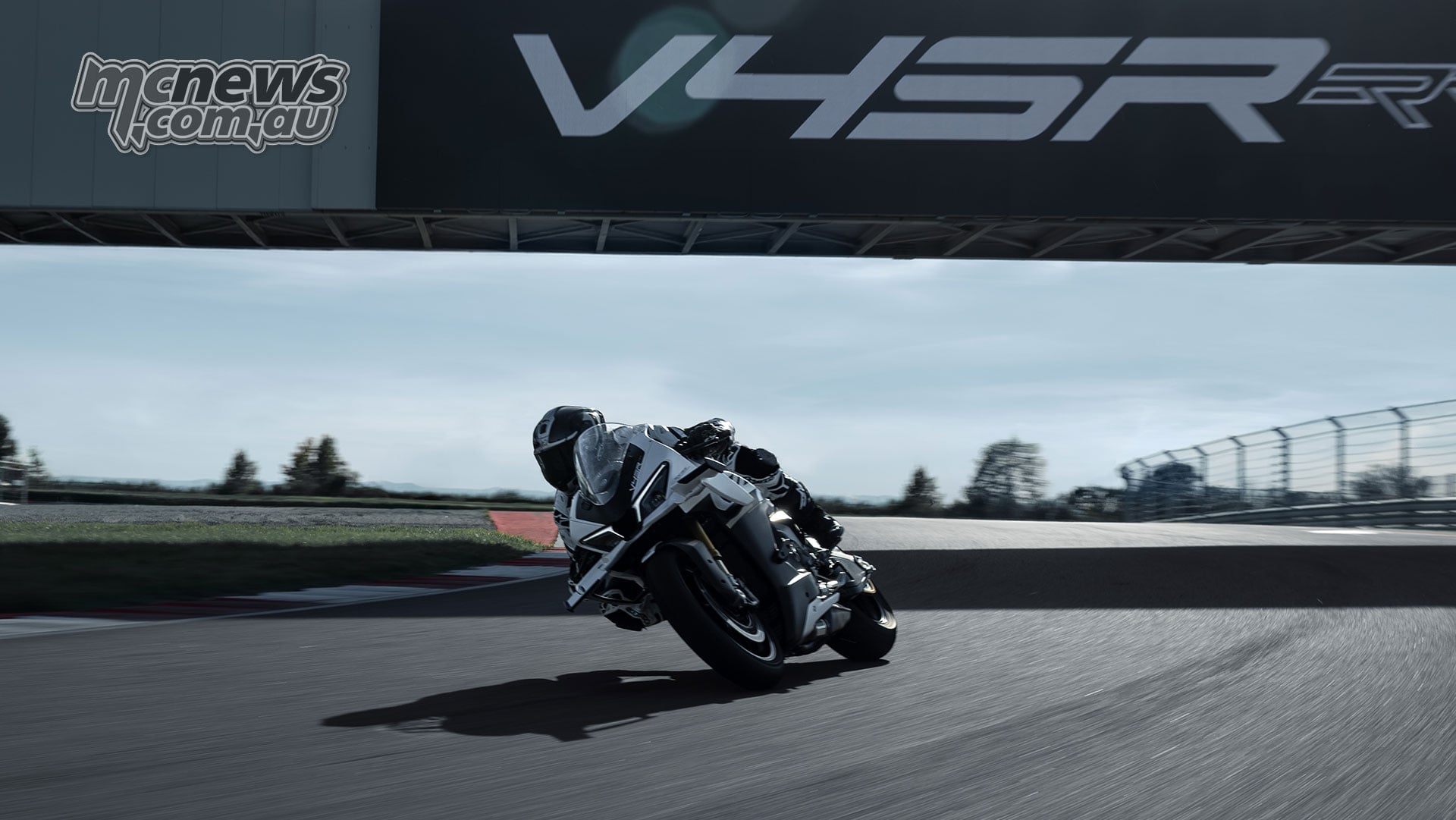
Winglets that work independently
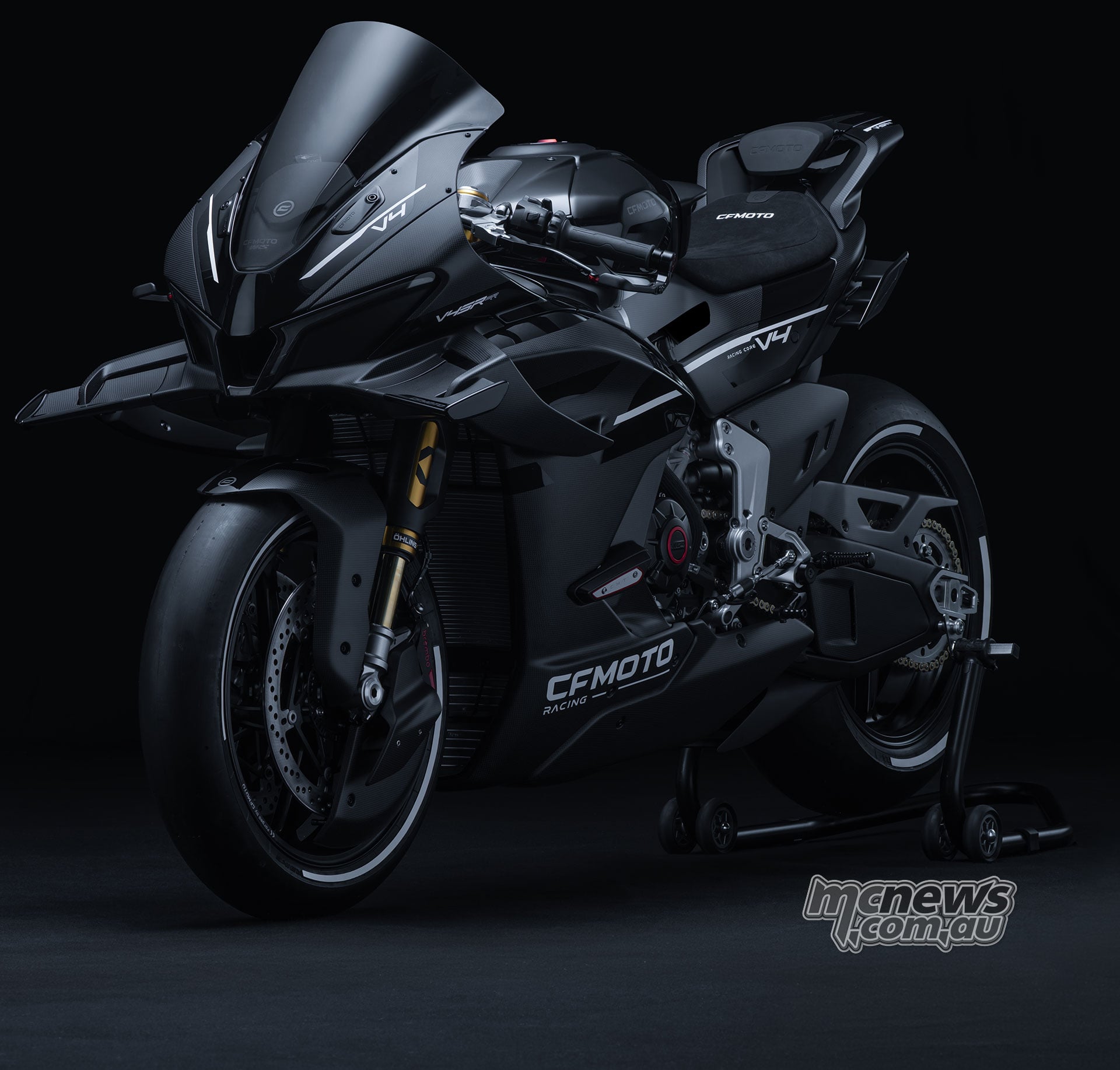
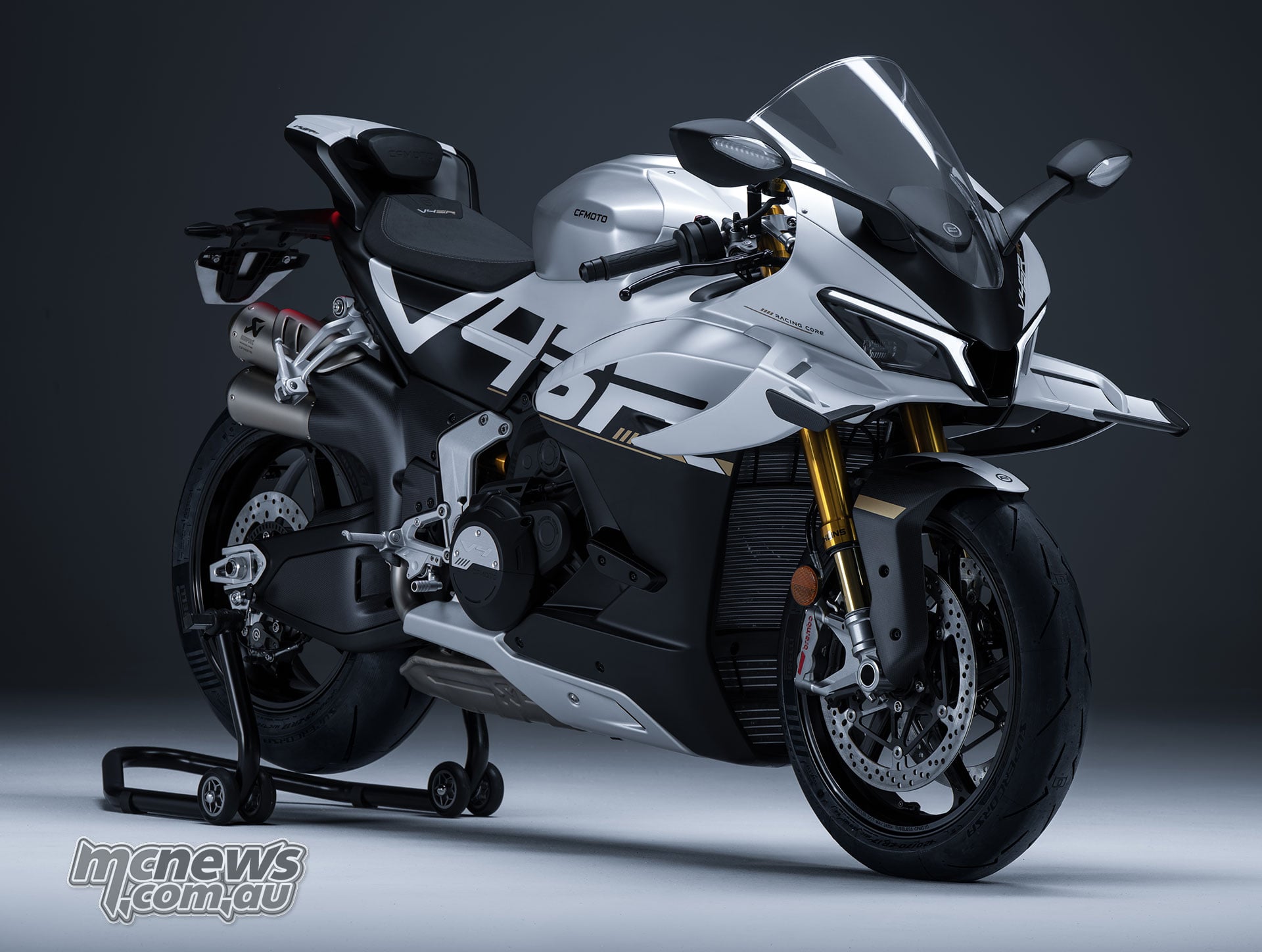
The most revealing new detail concerns the active aerodynamics. CFMOTO says the V4SR-RR’s winglets can operate independently, allowing the system to change its aerodynamic effect according to what the motorcycle is being asked to do.
Its specific claim is a 20 per cent increase in front-wheel downforce compared with fixed winglets immediately before braking at 160 km/h. At higher speeds, asymmetric operation is intended to assist directional changes as the machine changes the angle of the front wings mechanically as required.
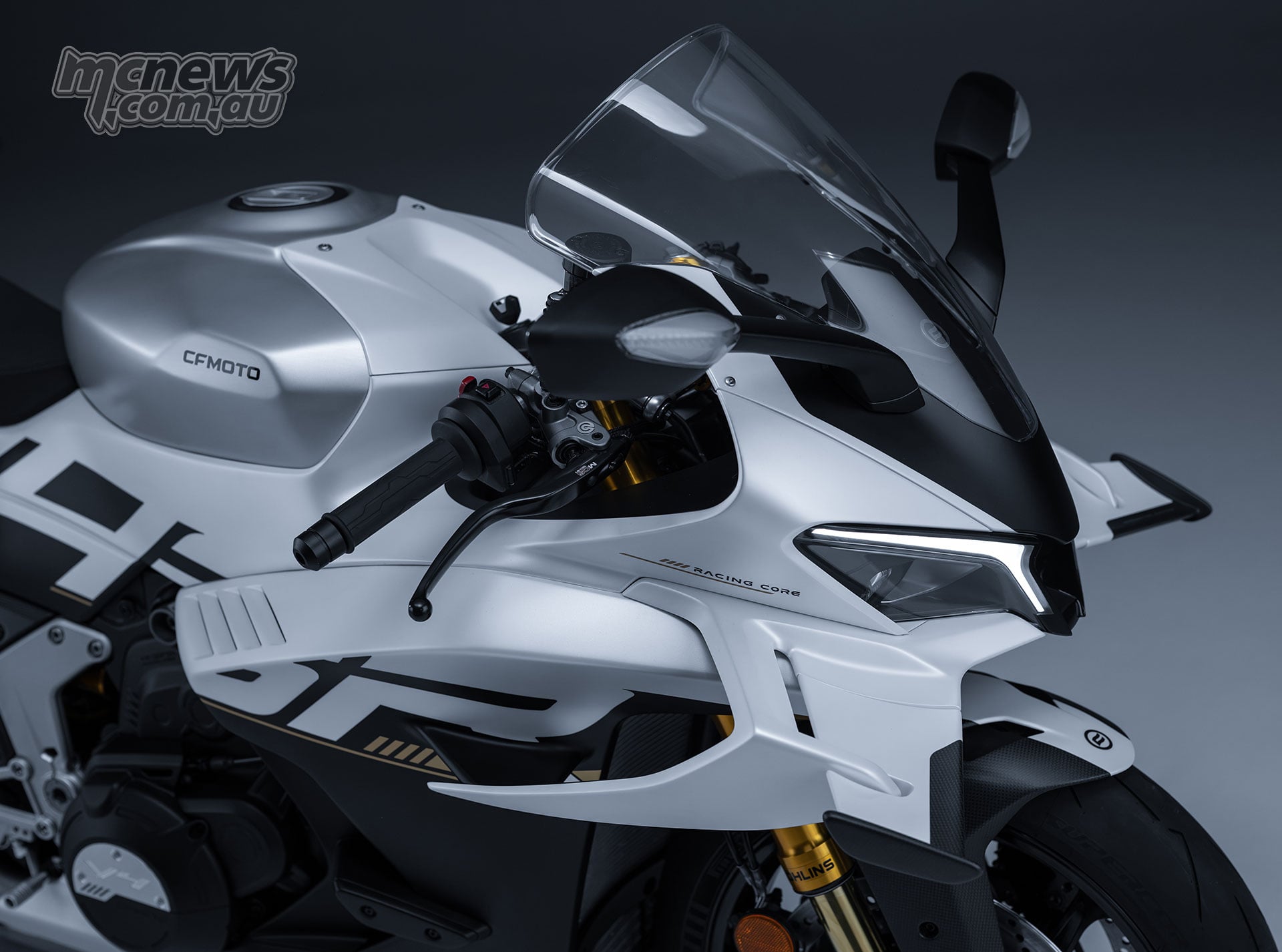
The goal is to make the aerodynamic load useful for more of the lap. Braking and changing direction place different demands on a motorcycle; independently controlled surfaces are CFMOTO’s proposed way of responding to both via active aero.
Adjustable reinforcement adds to the chassis story
CFMOTO also identifies a patented adjustable frame reinforcement system, paired with fully adjustable Öhlins suspension.
That is an intriguing addition to the chassis approach Zhou explained during our visit. He described a compact monocoque-type structure using the engine as a major load-bearing component, with unusually low front engine mounts intended to provide strong support under braking while allowing more lateral compliance in corners.
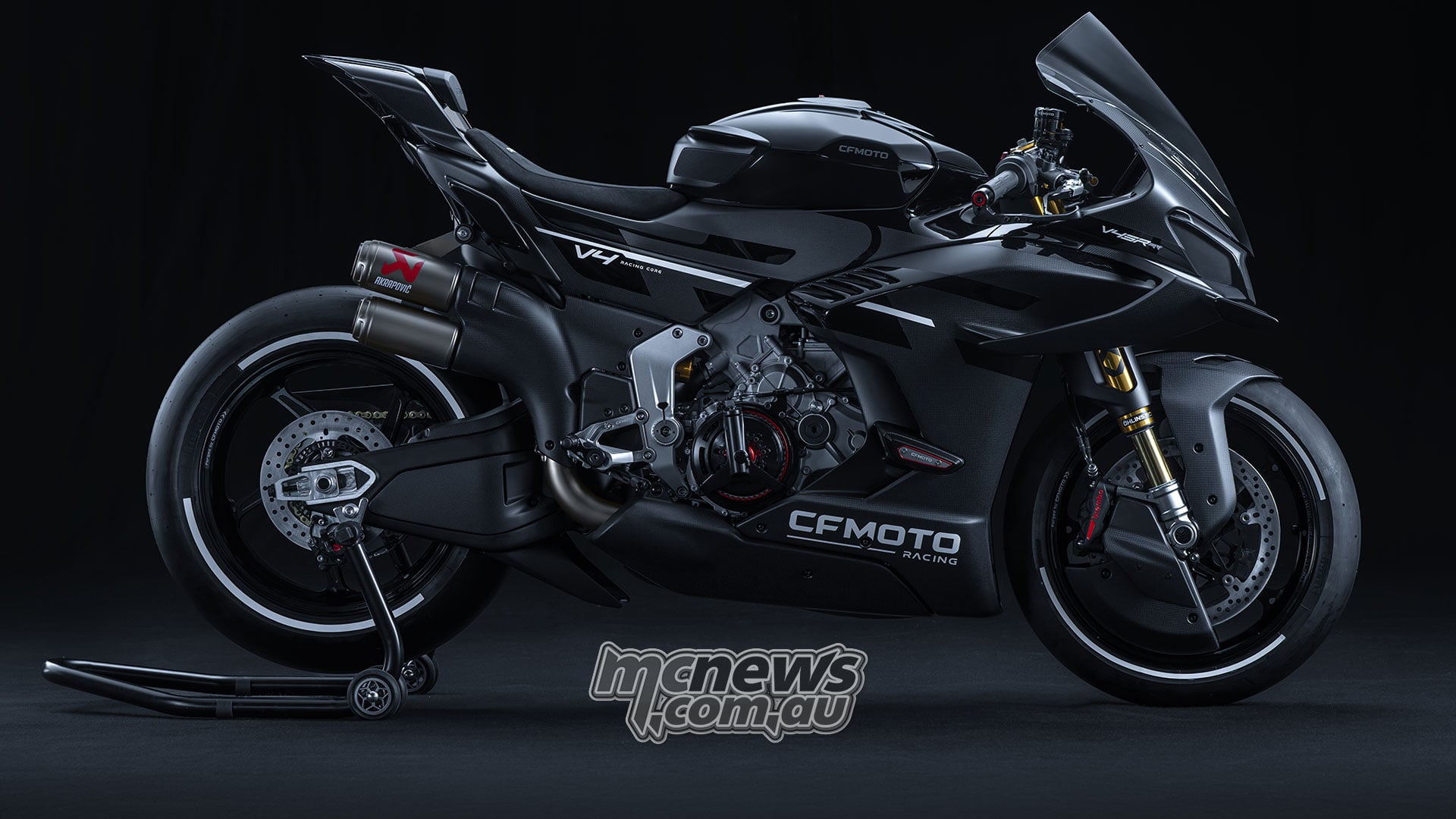
The adjustable reinforcement suggests scope to tune that stiffness balance, although the latest documents do not explain the adjustment mechanism or its range. How it works, and how readily it can be altered, remain details to come.
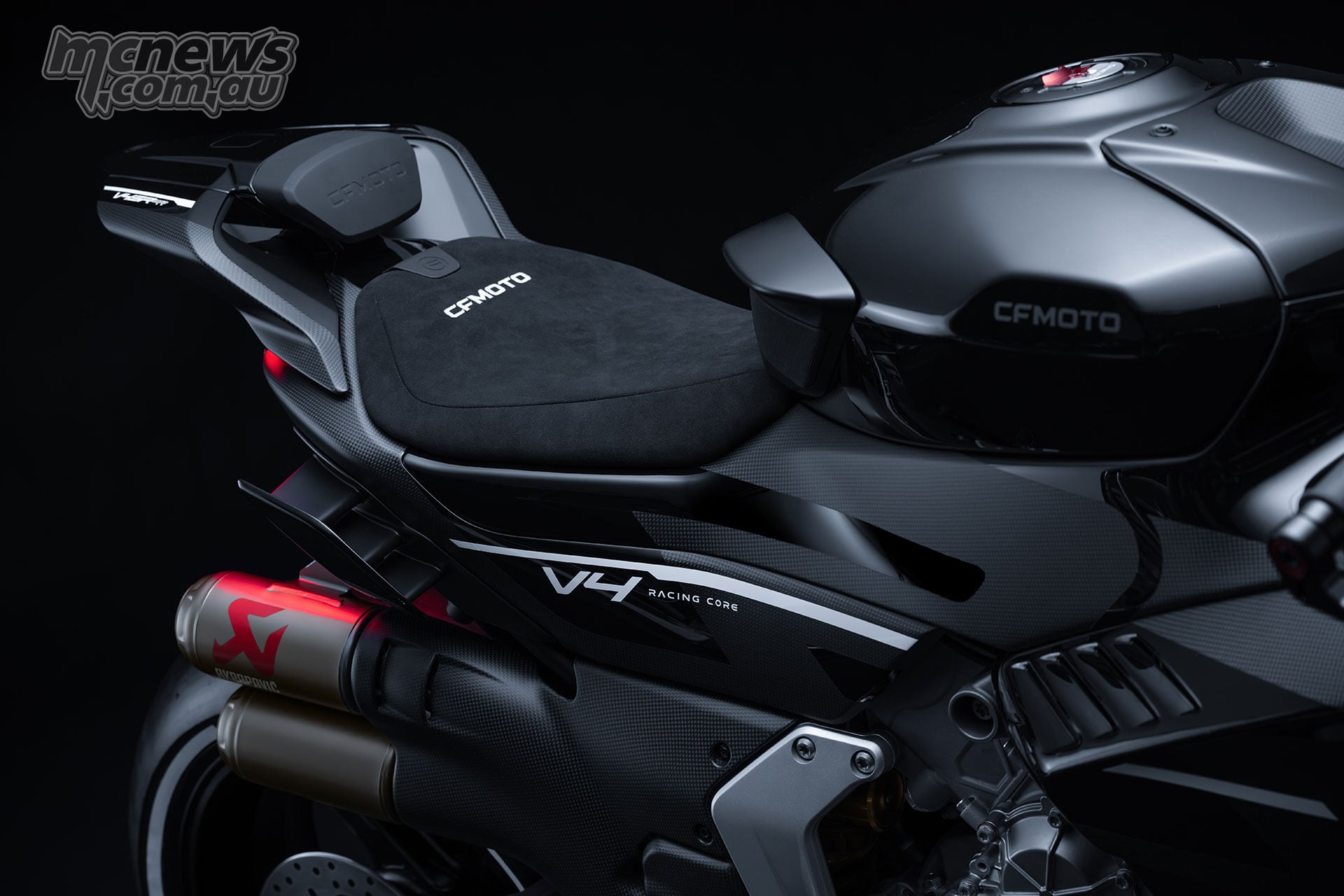
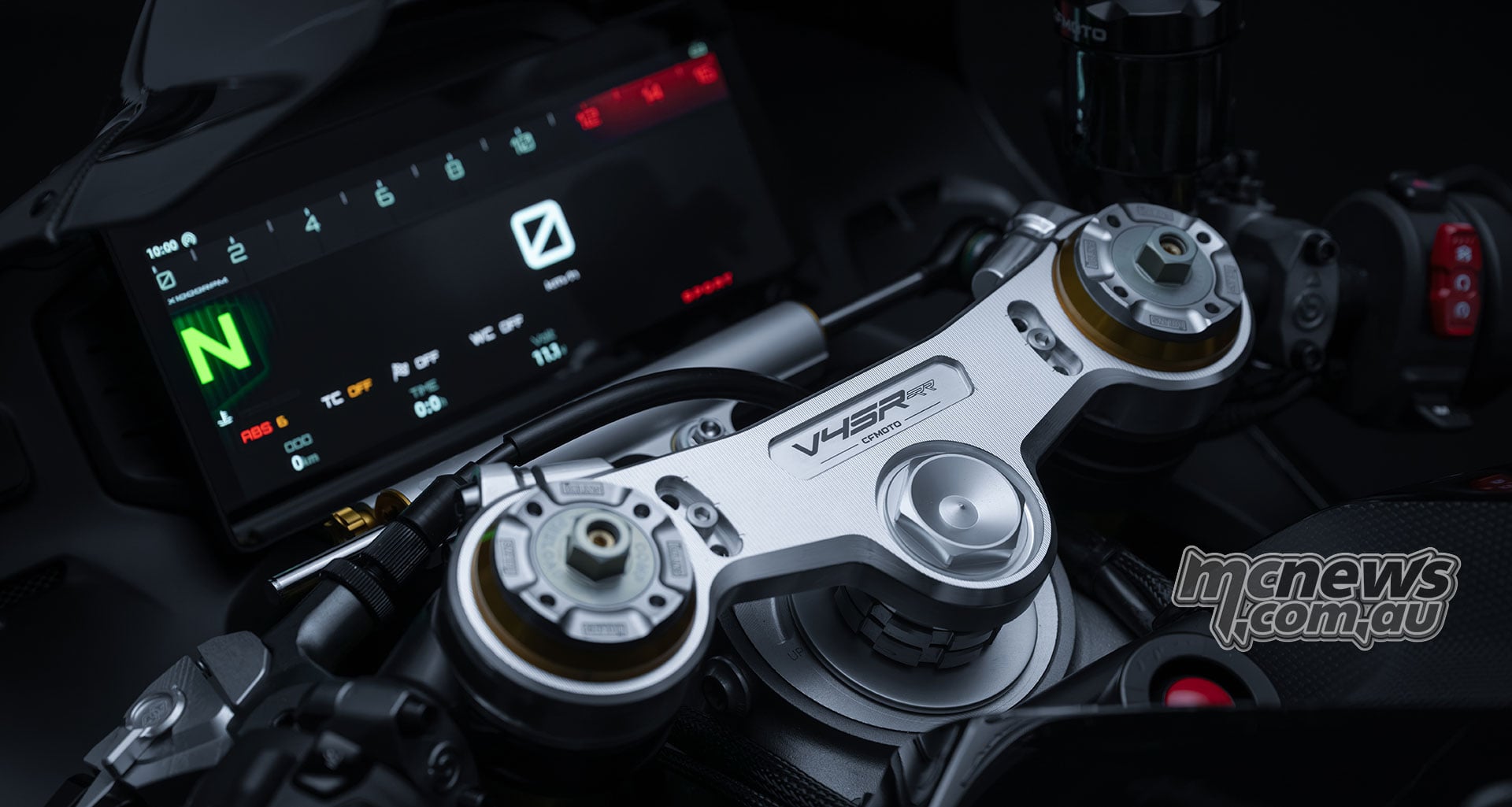
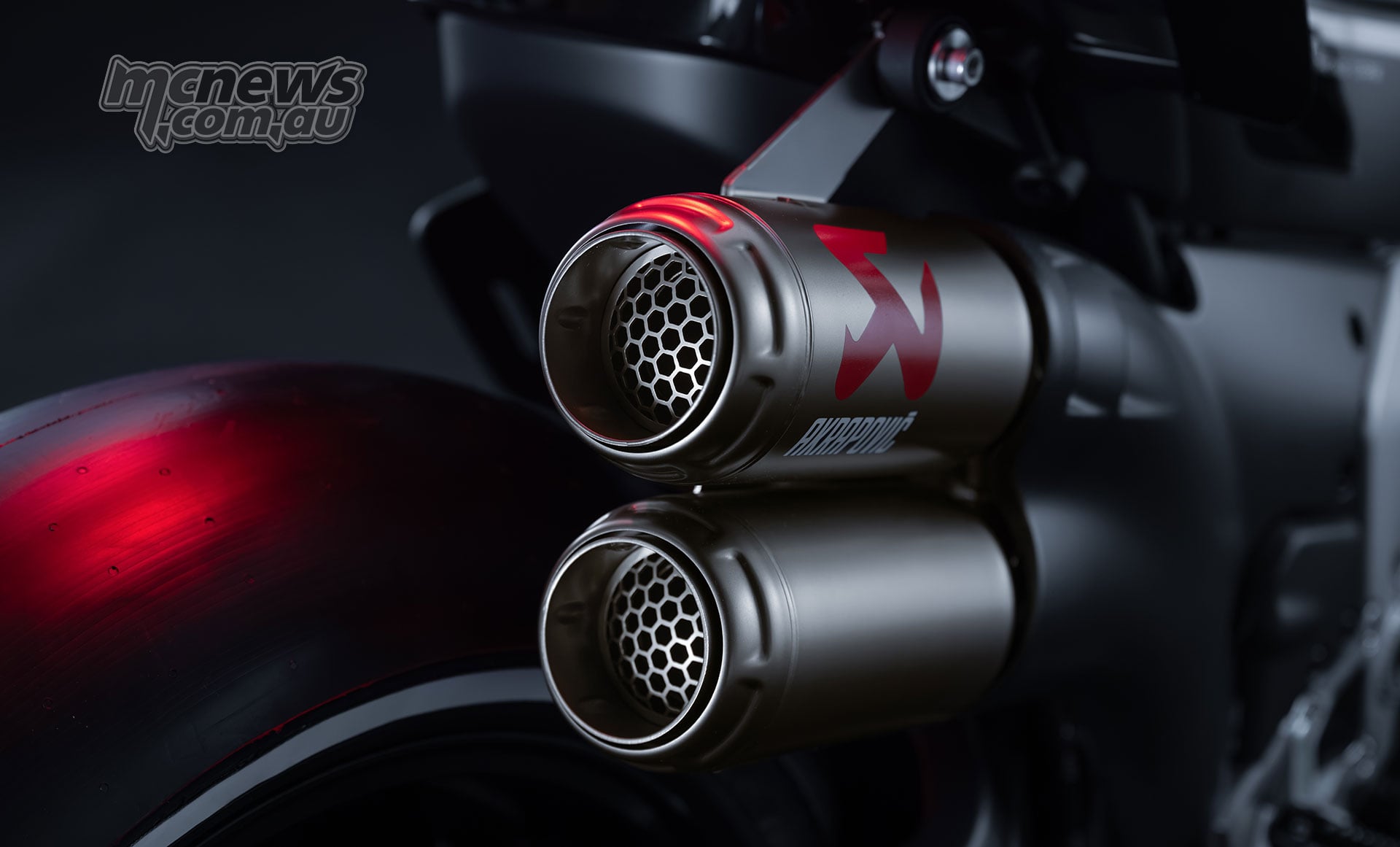
Elsewhere, CFMOTO specifies Brembo Hypure Sport brake calipers, Pirelli Diablo Supercorsa SP V4 tyres and a full-titanium Akrapovič exhaust, all top-shelf components. Combined with the Öhlins suspension, that is a substantial collection of established performance hardware for the company’s first V4 superbike.
Carbon Black explores the more extreme end
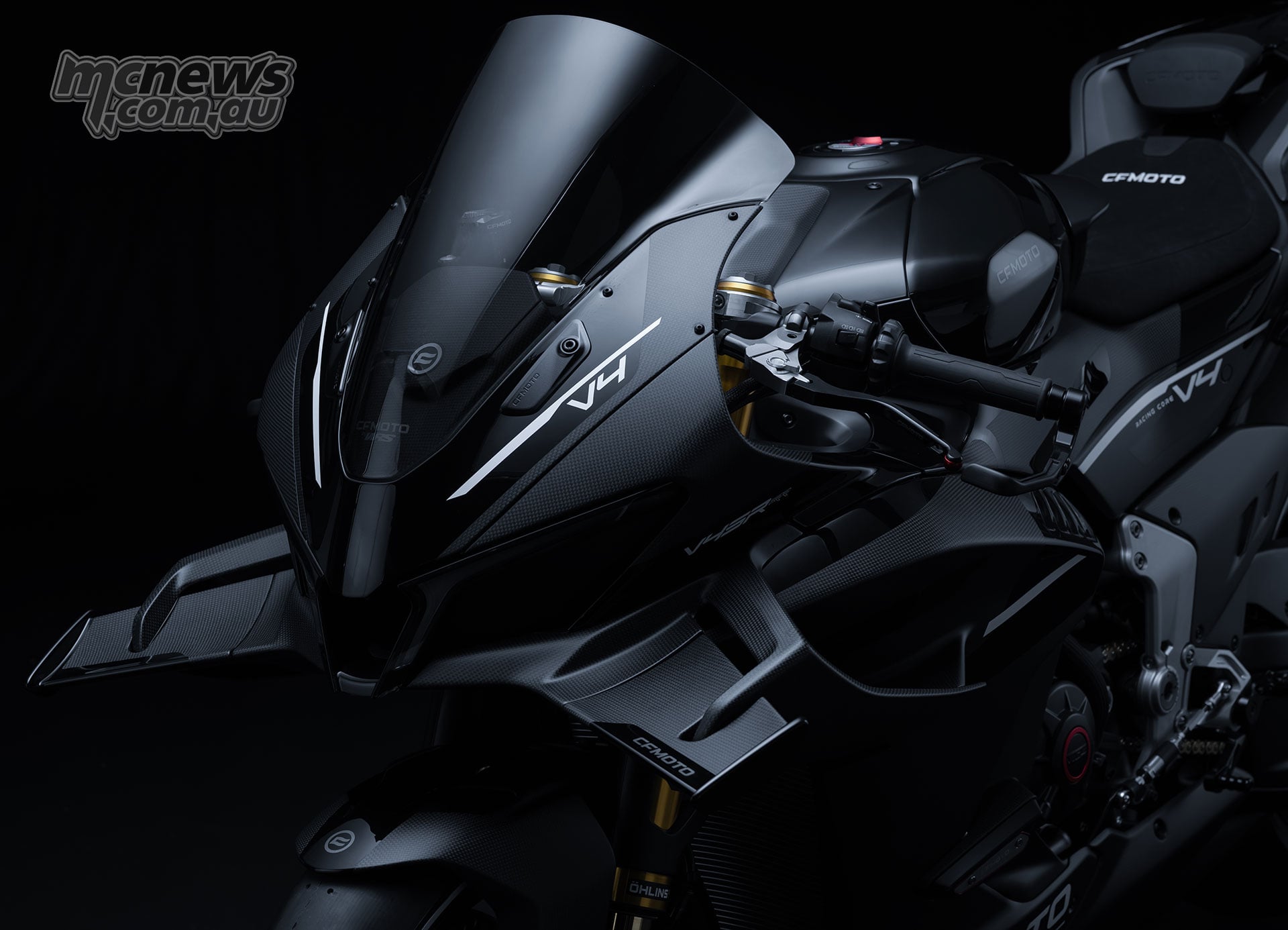
The V4SR-RR Carbon Black was developed specifically as an exclusive EICMA 2026 showbike, showcasing a more radical, track-focused interpretation and the potential for personalisation.
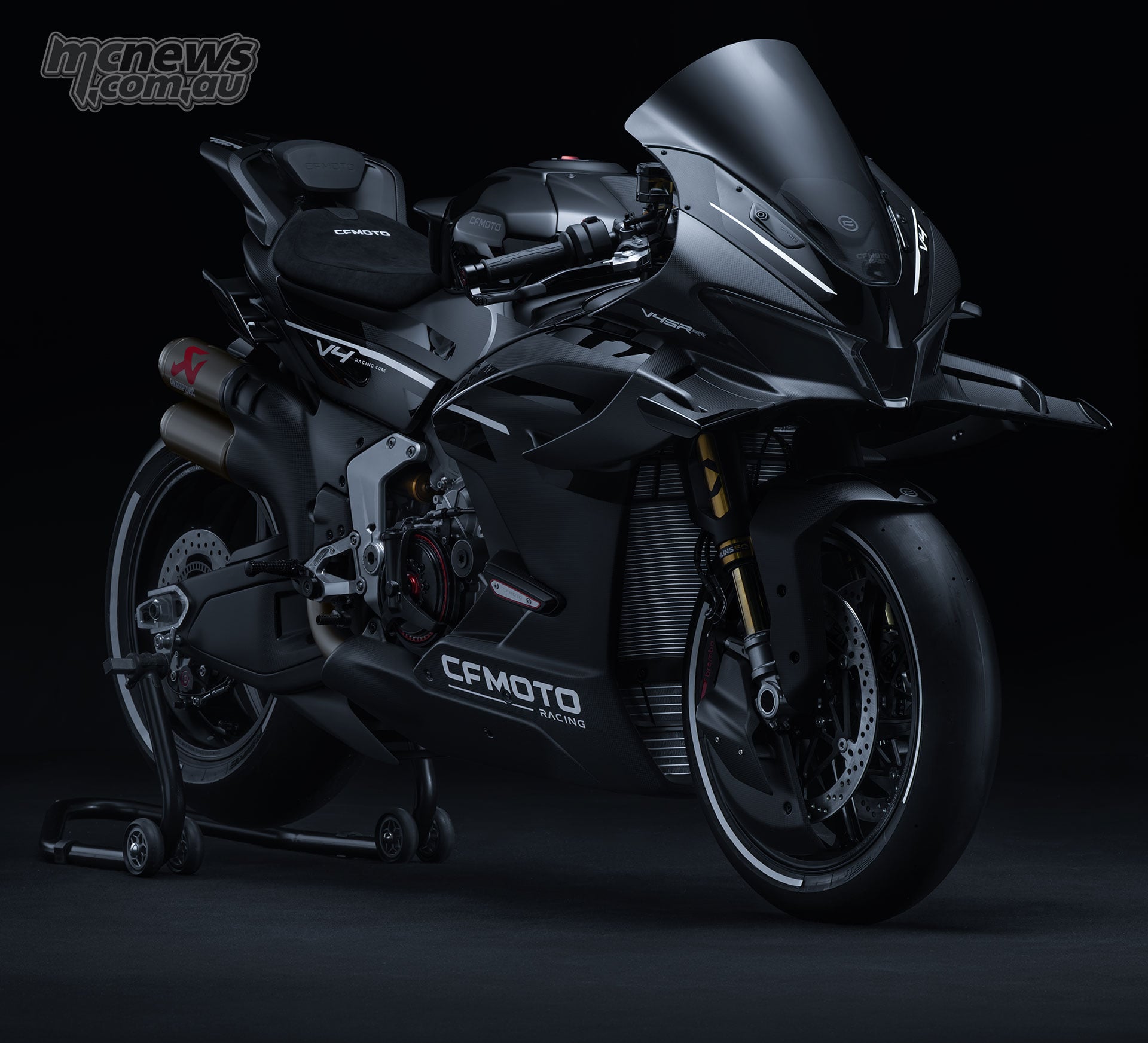
It features an all-black finish and extensive carbon-fibre bodywork; dedicated GILLES Tooling accessories and an STM dry slipper clutch add to the pukka credentials.
No separate power or weight figure is supplied for Carbon Black. Its showbike status also means the display does not establish an additional roadgoing model or a confirmed production specification.
Where does WorldSBK fit?
The specification naturally keeps attention on the V4’s potential as a World Superbike platform. A 997 cc engine developed in-house would put much more of CFMOTO’s own engineering directly into competition against established superbike manufacturers.
Our examination of CFMOTO’s racing strategy covered reports linking Aspar and Albert Arenas to a possible V4 WorldSBK programme. EICMA revealed no V4 team, rider or debut date, so those plans remain unconfirmed.
The immediate production-racing commitment is the 675SR-R becoming the exclusive motorcycle for WorldWCR from 2027. CFMOTO’s MotoGP ambition sits further out, with no entry timetable announced during our Hangzhou discussions.
For the V4, a WorldSBK appearance would still require the relevant homologation and race preparation. The road bike’s active winglets and other equipment should not be assumed to describe an eventual racing specification.
CFMOTO cautions that specifications and equipment remain subject to final confirmation. For Australia, the announcement supplies no price or arrival date, while production kerb weight and the final roadgoing specification remain to be confirmed.