

CFMOTO R&D
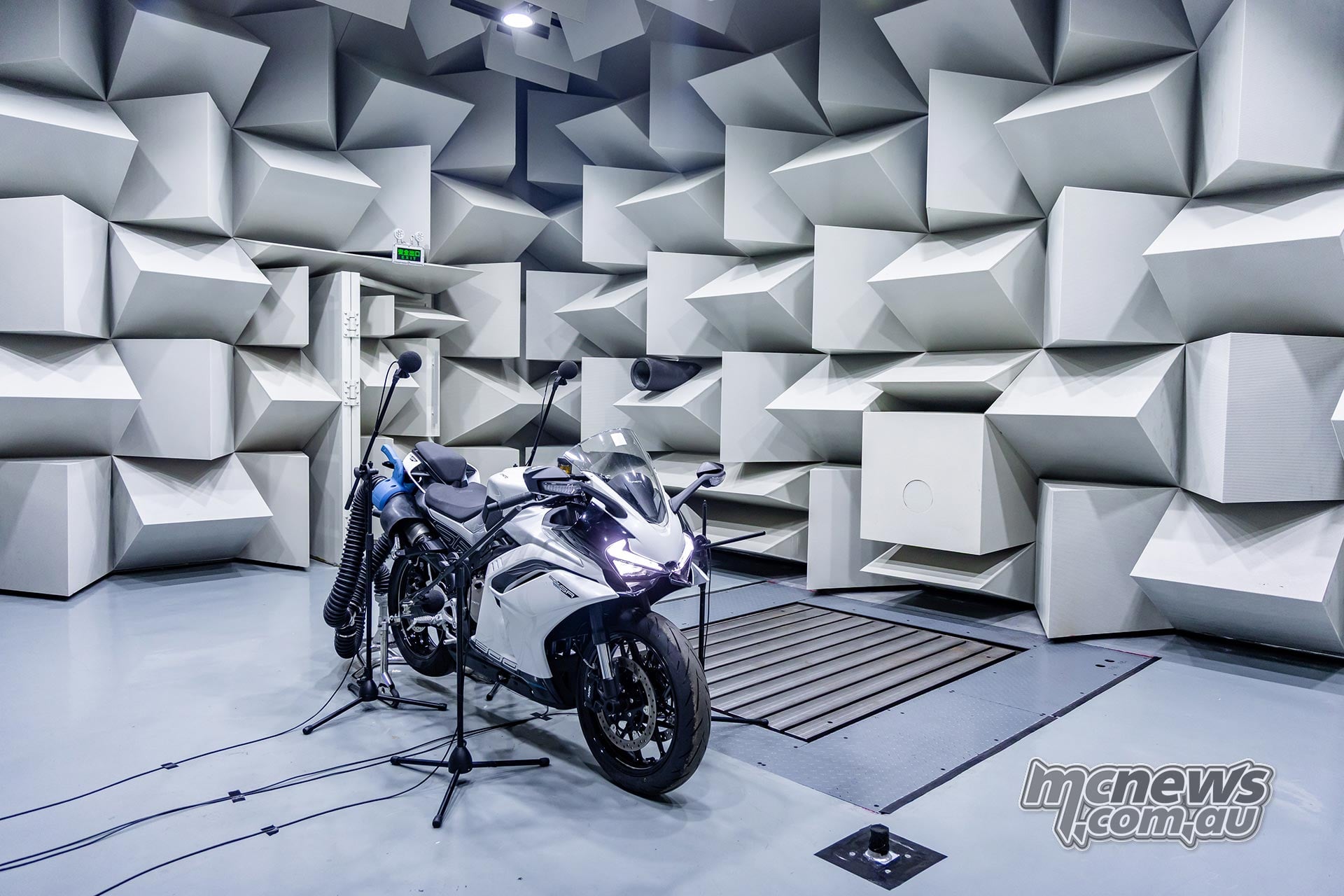
Inside CFMOTO’s noise laboratory in Hangzhou, a complete motorcycle sat surrounded by microphones, its exhaust hooked up to extraction ducting and the walls lined with deep acoustic wedges. With less sound bouncing off the walls, engineers can trace each noise back to the part of the bike making it. Quietening a gearbox whine or a buzzing panel gives them more room under the legal noise limit to bring out the sounds that give the bike character, like the intake growl when you crack the throttle.
CFMOTO says group R&D spending reached US$186 million in the first nine months of 2026, up nearly half on a year earlier. That covers the wider business, including off-road vehicles and electric mobility. Our manufacturing feature looked at how CFMOTO builds its motorcycles consistently. In Hangzhou’s R&D buildings, we saw the work that comes before they reach the line.
Turning rider needs into engineering targets
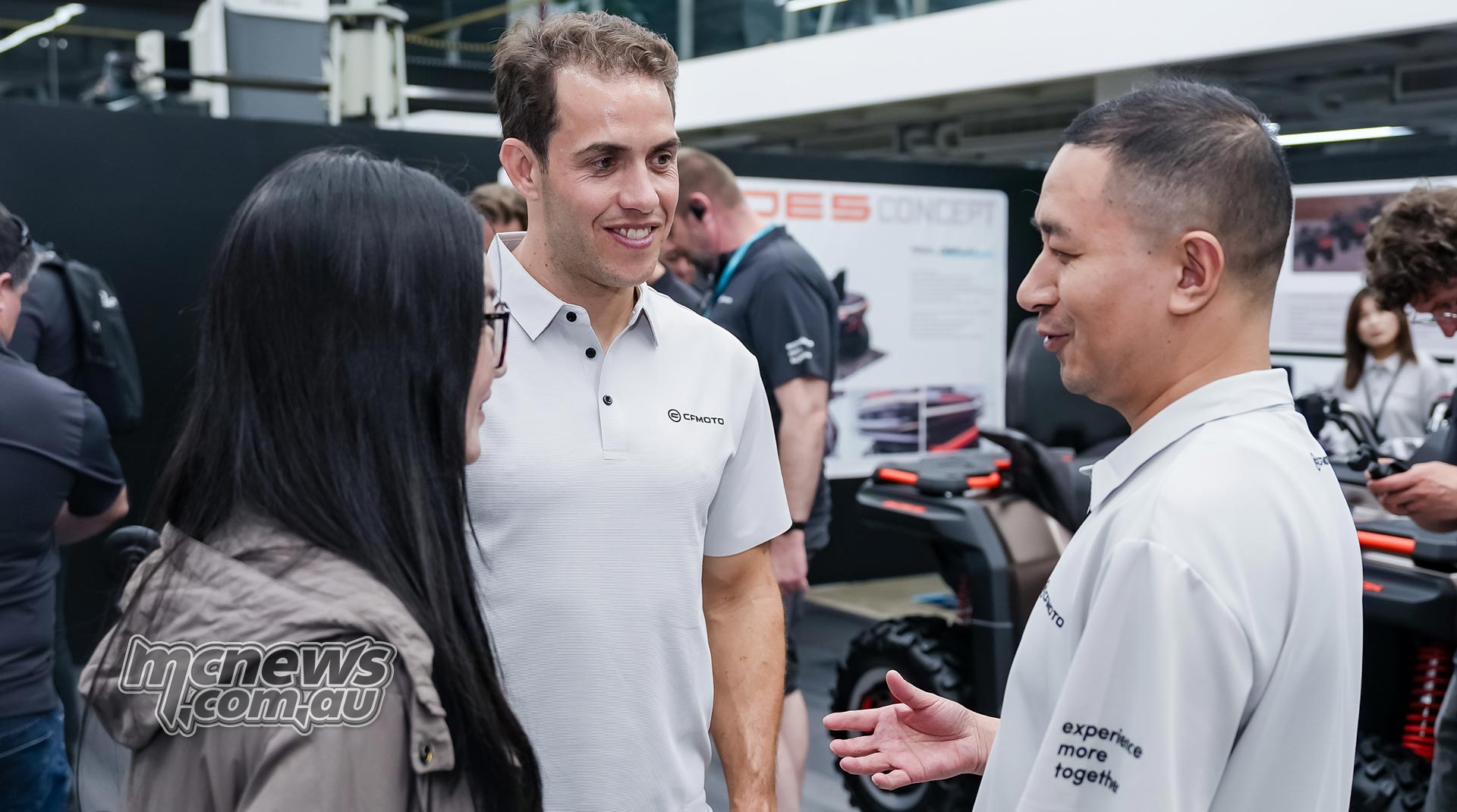
Jeff Xu, Director of the Vehicle System Integration Centre within CFMOTO’s Group R&D Institute, explained through an interpreter where the process starts.
Jeff Xu
“All our R&D work is always rooted in one thing: real world riding scenarios for our users.”
Xu called it a requirements pyramid. A request for a smoother motorcycle first needs a measurable target for the whole bike. From there, engineers can work out what needs to change in the engine, its mounts, the chassis or the control software. Testing works back up from individual components to the complete motorcycle.

The 550MT and 550MT-X unveiled at EICMA illustrate how different rider needs can shape the same platform. Both use the same new parallel twin. The X gets long-travel suspension for rougher terrain and narrow bodywork that gives riders room to move on the pegs. The touring 550MT has a lower seat and a bigger tank.
Simulation meets physical testing
Computer-aided engineering lets CFMOTO investigate frame strength, airflow, crash behaviour and vibration before making physical parts. Xu stressed that the calculations still have to stand up to testing.
For the V4 programme, CFMOTO combined airflow simulation with wind-tunnel work in China and Italy and testing on track. The V4SR-RR’s active winglets, detailed at EICMA, can move independently. They’re designed to add load to the front tyre for braking. Angling the winglets differently from side to side is intended to help the bike change direction at speed.
Watch the V4SR-RR’s active winglets move.
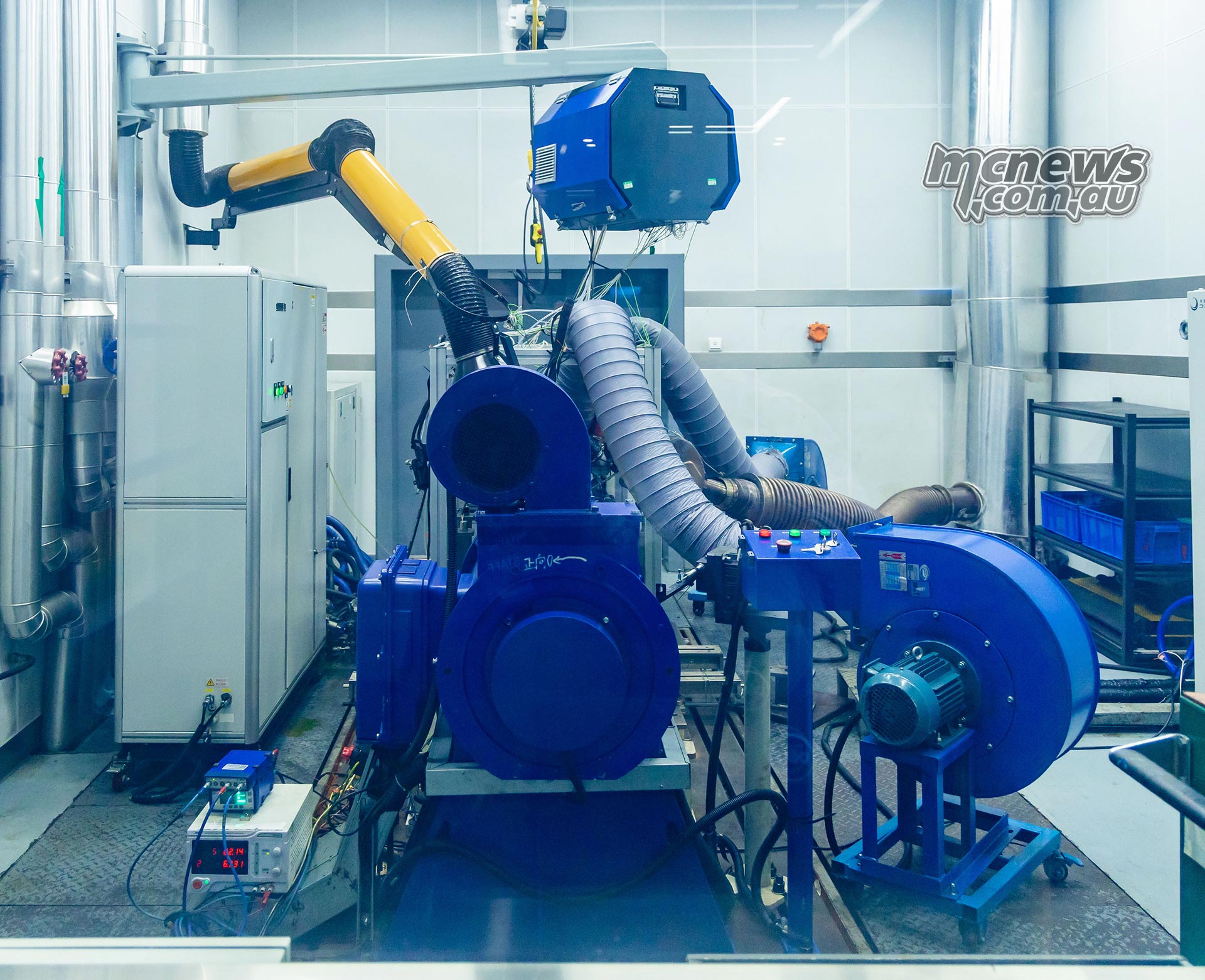
I lost count of the dyno cells during our tour. More than ten were running, with complete engines behind glass and staff monitoring them from workstations outside. CFMOTO uses those cells for performance, calibration and durability work, with separate equipment for electric powertrains.
Refinement brings its own compromises
The engineers also look for resonances that can reach the rider as a buzz through the bars, seat or pegs.
That work can change the hardware. In our V4 engine and chassis feature, Joe Zhou explained that the engine gained weight when CFMOTO added measures to reduce noise and vibration.
Shaker rigs put parts through repeated loads to check for fatigue. Xu also outlined a climate chamber with a chassis dyno, due to come online by the end of 2026. That would let engineers run a complete motorcycle in simulated heat, cold or altitude and repeat the test after making a change.
The software behind the hardware
CFMOTO develops software in-house for its rider displays, motor controllers, vehicle control units and battery management, with shared platforms across models. Its next-generation electronic architecture, EEA 3.0, is designed to bring more functions under central control and support features such as over-the-air updates. Xu described a system that tracks each software feature from the initial request through testing and release.
Electronic clutches and AMT
Automated manual transmission (AMT) makes the link between software and hardware easy to feel. The system Xu described uses separate actuators for the clutch and gear selection. The calibration has to give the rider a smooth take-off and enough control to creep through a tight turn, then coordinate the clutch and gear changes for quick shifts under acceleration.
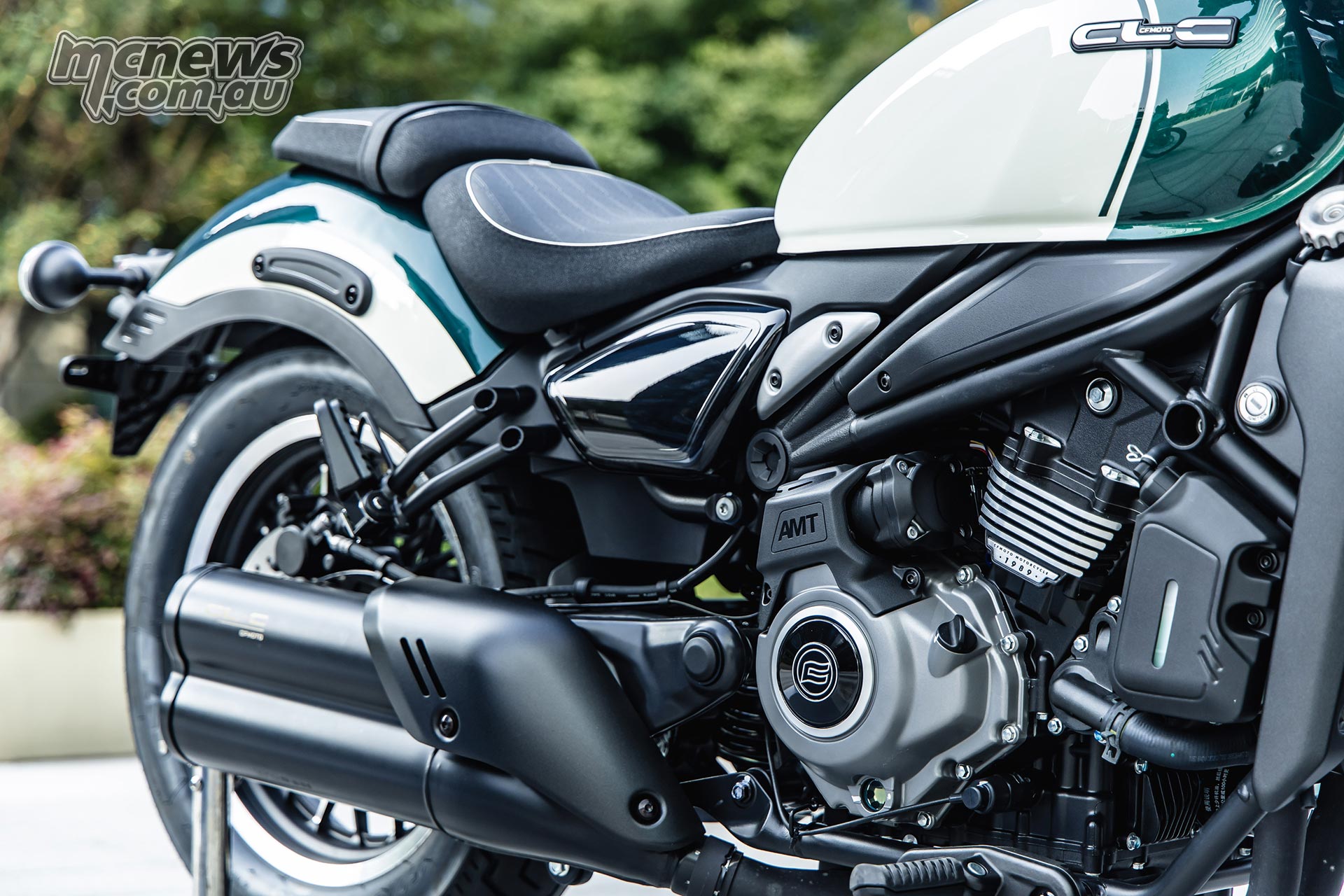
We saw an AMT-badged CL-C in Hangzhou. The touring 550MT takes a simpler approach, with a standard bi-directional quickshifter and an optional electronic auto-clutch in some markets.
Mario Román’s line to the engineers
As we reported in our look at CFMOTO’s racing strategy, Mario Román can flag problems he encounters in competition directly with engineers in China through a dedicated WeChat group. He also tests prototypes and components and takes part in product planning.
Román won Adventure Ultimate at Romaniacs on a 450MT with its standard frame and engine internals. Suspension, tyres and mapping were among the changes for the race. He joined CFMOTO in Milan for the unveiling of the 550MT-X.