

Could CFMOTO do on two wheels what China’s car makers did with EVs?
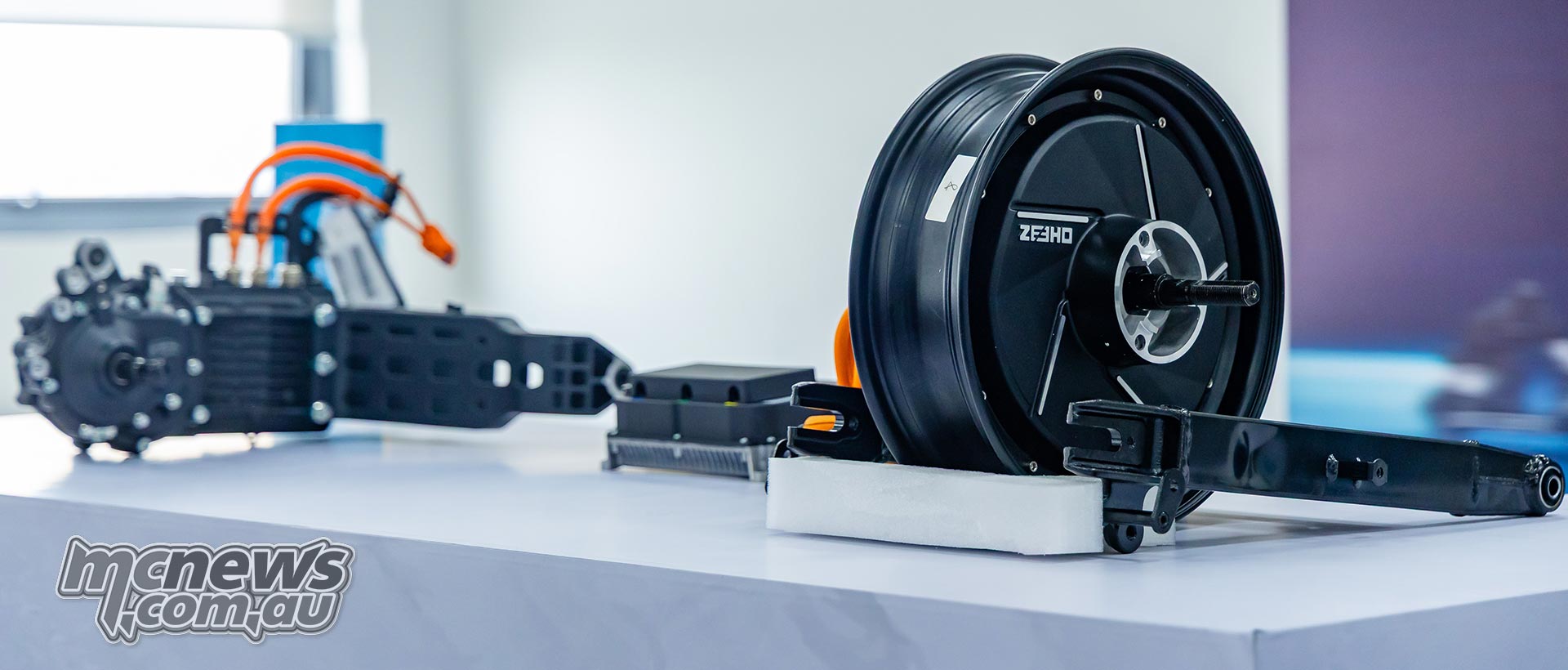
The CF-X we saw in CFMOTO’s Hangzhou exhibition hall was a full-size electric motocross bike. When the company unveiled the concept at EICMA in 2024, it put the bike’s output in the same territory as a 450 cc petrol motocrosser.
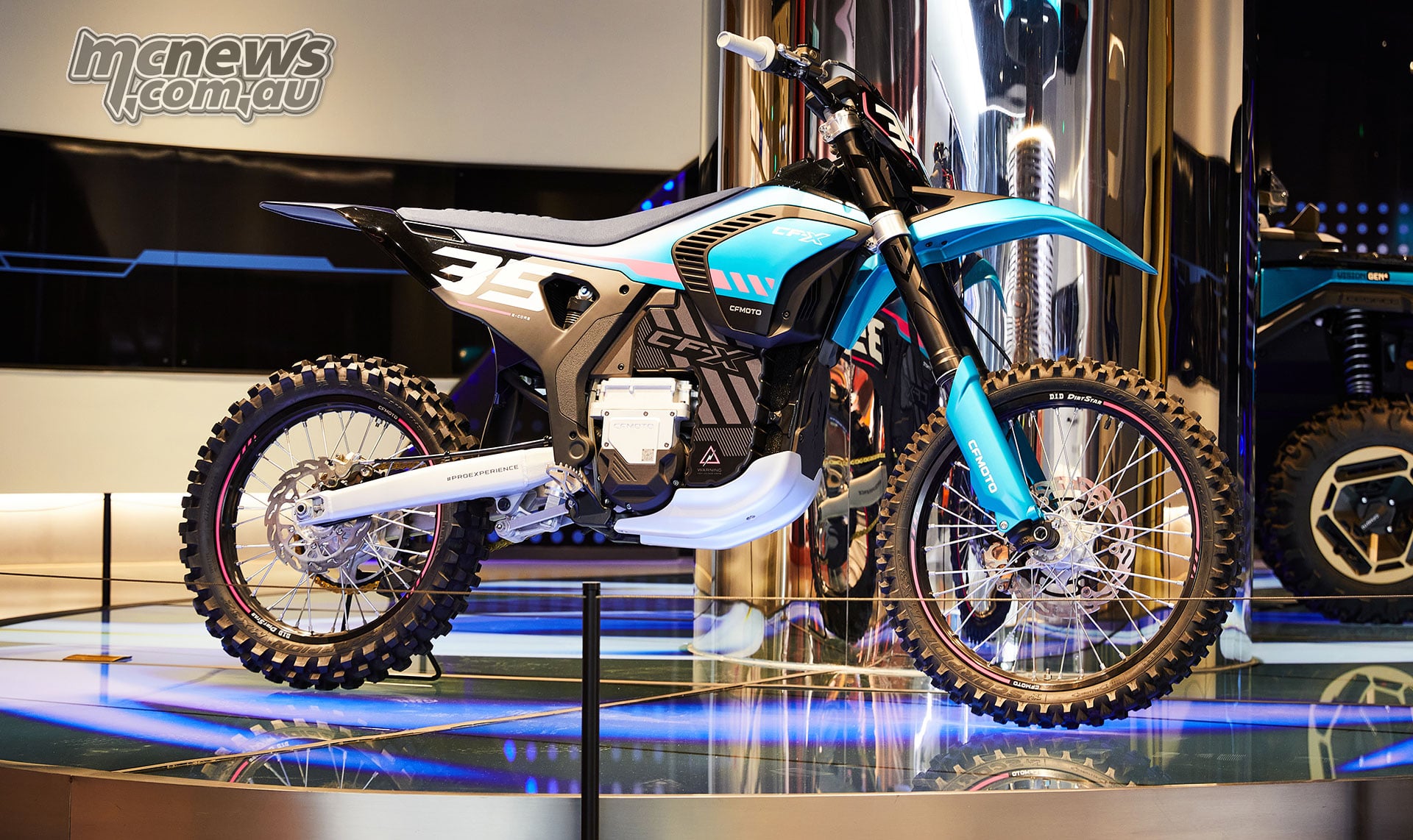
CFMOTO brought its CX-2E and CX-5E electric minibikes to Australia in 2023. The same company has a 675 cc triple in showrooms and a 997 cc V4 superbike in development. I wanted to know where a full-size electric motorcycle fits in that mix.
China’s EV advantage
Chinese car makers are cutting the established manufacturers’ lunch with EVs. I put it to CFMOTO’s management that it could do something similar on two wheels. To my mind, CFMOTO has made more headway with Western riders than any other Chinese motorcycle brand. More than 4,000 450MTs have hit Australian roads since May 2024. Management told me it sold more than 12,000 in Europe in 2024, despite the bike arriving partway through the year.
CFMOTO has China’s EV engineers, component suppliers and manufacturing muscle on its doorstep. Add that to the foothold it’s already got in Western markets, and I figured the question was when it would pull the trigger on full-size electric motorcycles.
Management pointed to what it has already done with ZEEHO. The company has concepts and studies in hand and draws on some of the same Chinese suppliers as the car makers. That gives it the means to move quickly.
CFMOTO management
“As soon as we see the market demand, we’ll be there.”
Earlier in the interview, management described how dealers and distributors feed riders’ comments back to R&D. I reckon listening to those riders is the right approach. Fill showrooms with electric bikes to tick a green box, and you leave the dealers trying to drum up demand for something their customers haven’t asked for.
ZEEHO’s head start
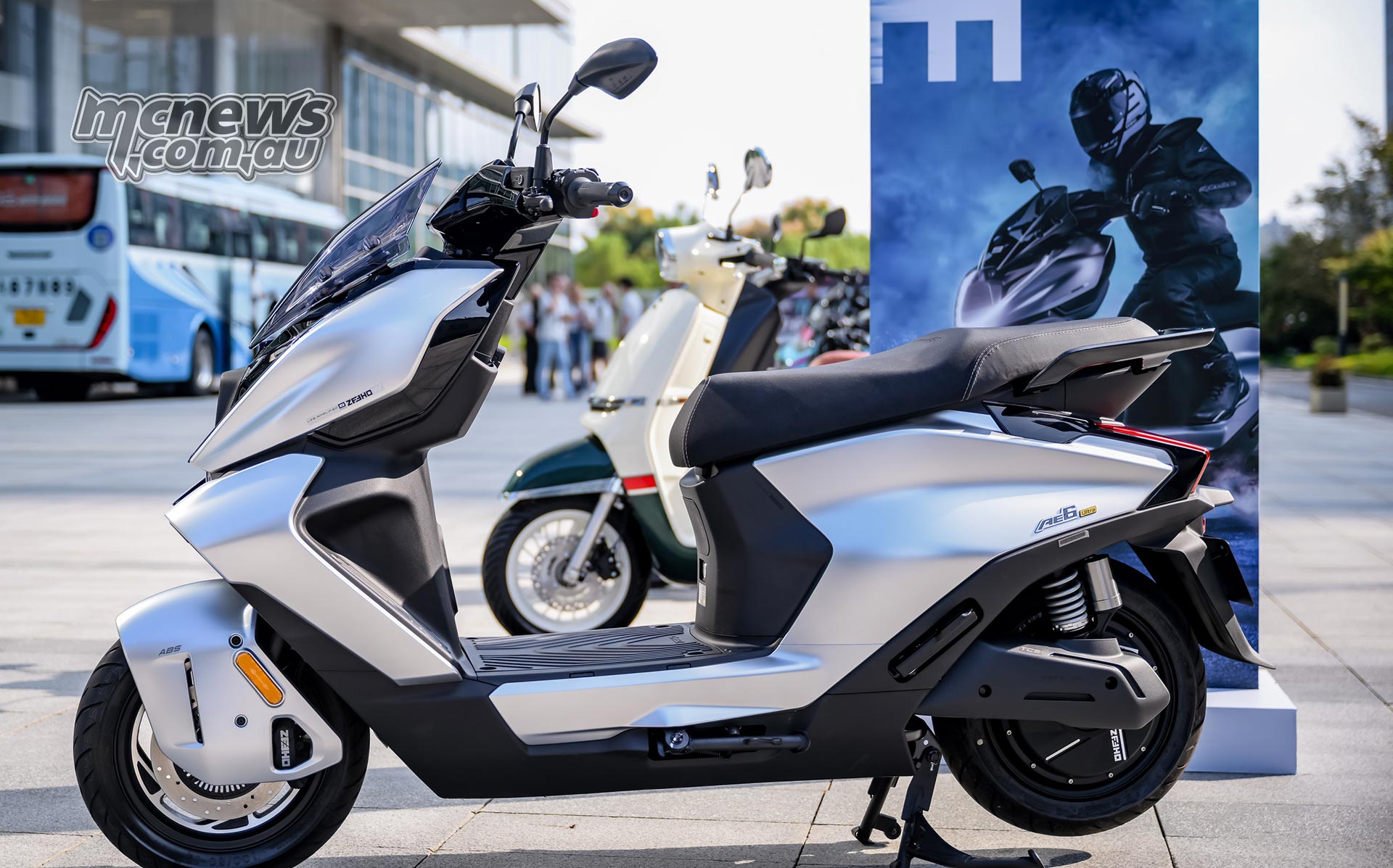
When we first covered ZEEHO in 2020, it led with the Cyber concept scooter. Today its range spans electric bicycles and scooters, and the brand has more than 2,600 outlets. Management said China remains the main market, with other territories taking the range where they see demand.
CFMOTO’s half-year report puts ZEEHO sales at 338,000 electric two-wheelers in the first six months of 2026. The group sold 196,400 petrol two-wheelers over the same period.
Electric models are part of the plan for CFMOTO’s new Jiaxing factory, which is designed for an annual capacity of three million two-wheelers.
An electric side-by-side for the block
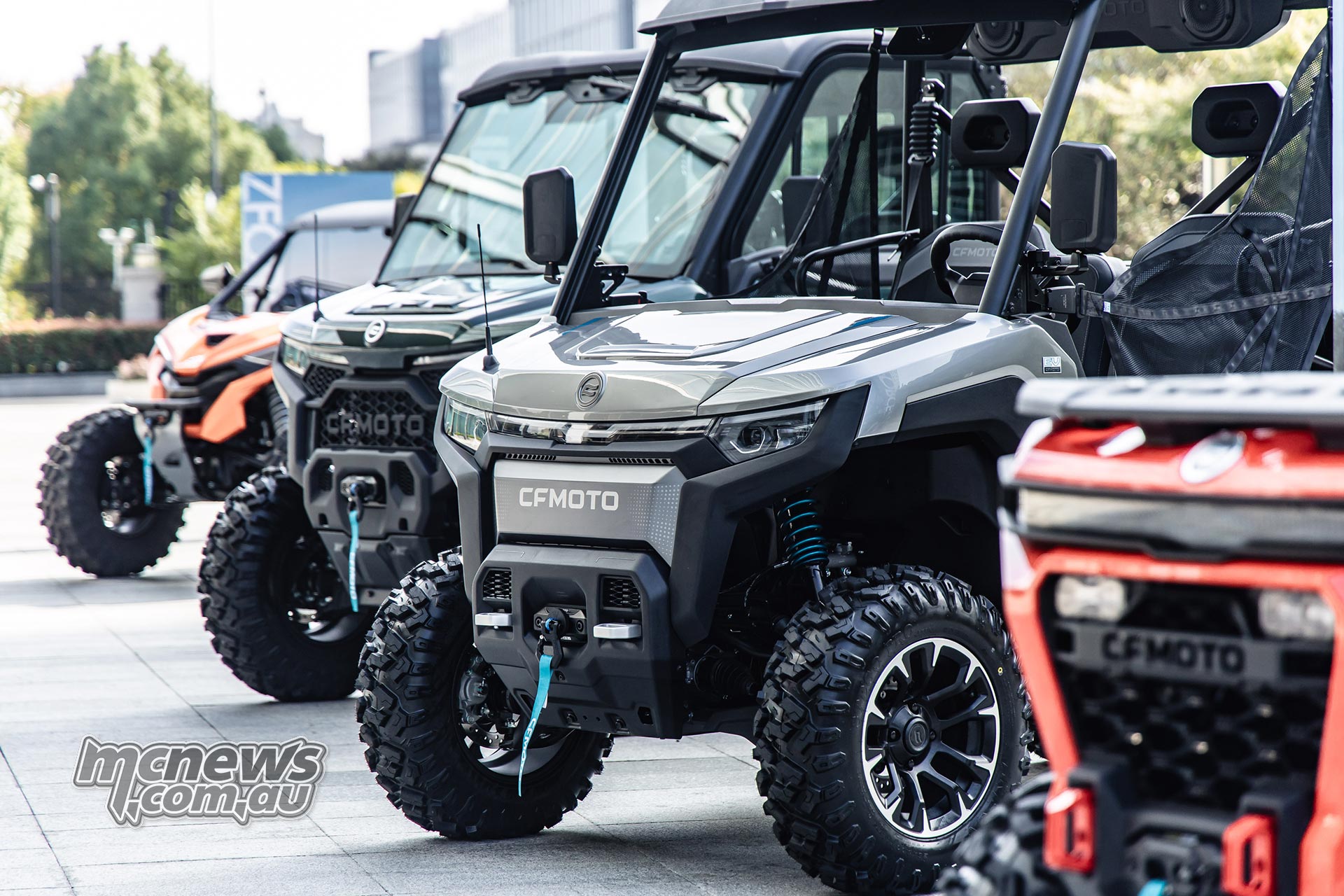
The UFORCE U6 EV is already in CFMOTO’s Australian range. I could picture putting it to work around my place. The jobs I do in a side-by-side are mostly short runs, and I could plug it in back at the shed when I’m done.
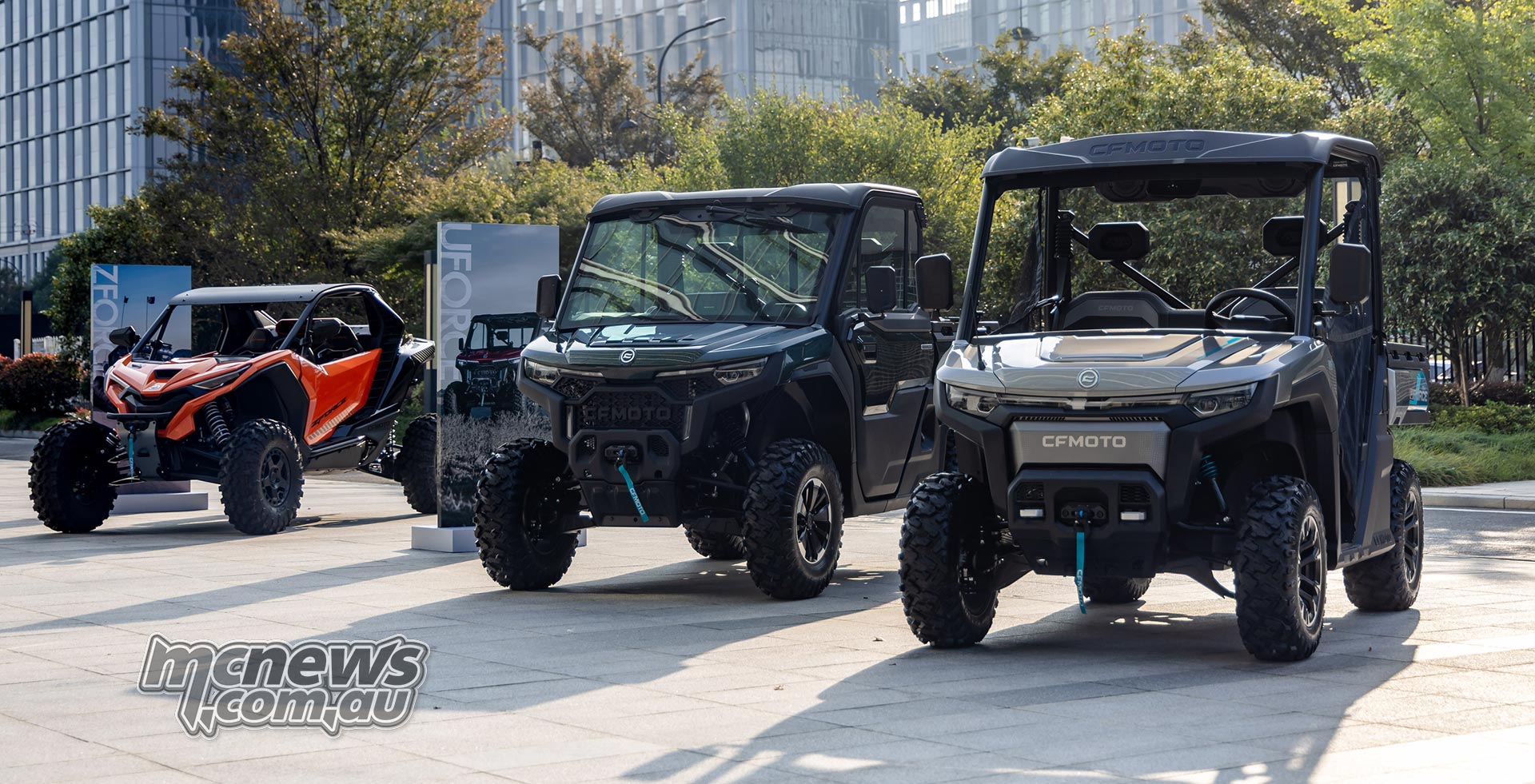
Its motor makes a peak 35 kW and 74 Nm, and it’s rated to tow 800 kg and carry 250 kg in the tray.
I’ve spent plenty of time in the V-twin UFORCE 1000 and the triple-cylinder U10 PRO. The U6 EV is smaller than either, which is handy around the block. I’d miss the space in their trays when loading tools and gear, and for the slippery stuff I’d want tyres with more bite than the U6 EV’s standard low-rolling-resistance rubber.
CFMOTO quotes up to 110 km at a steady 30–40 km/h in temperatures of 20–25 °C. With a trailer on the back, I’d judge it by how much work it gets through between charges.
On the electric drive bench
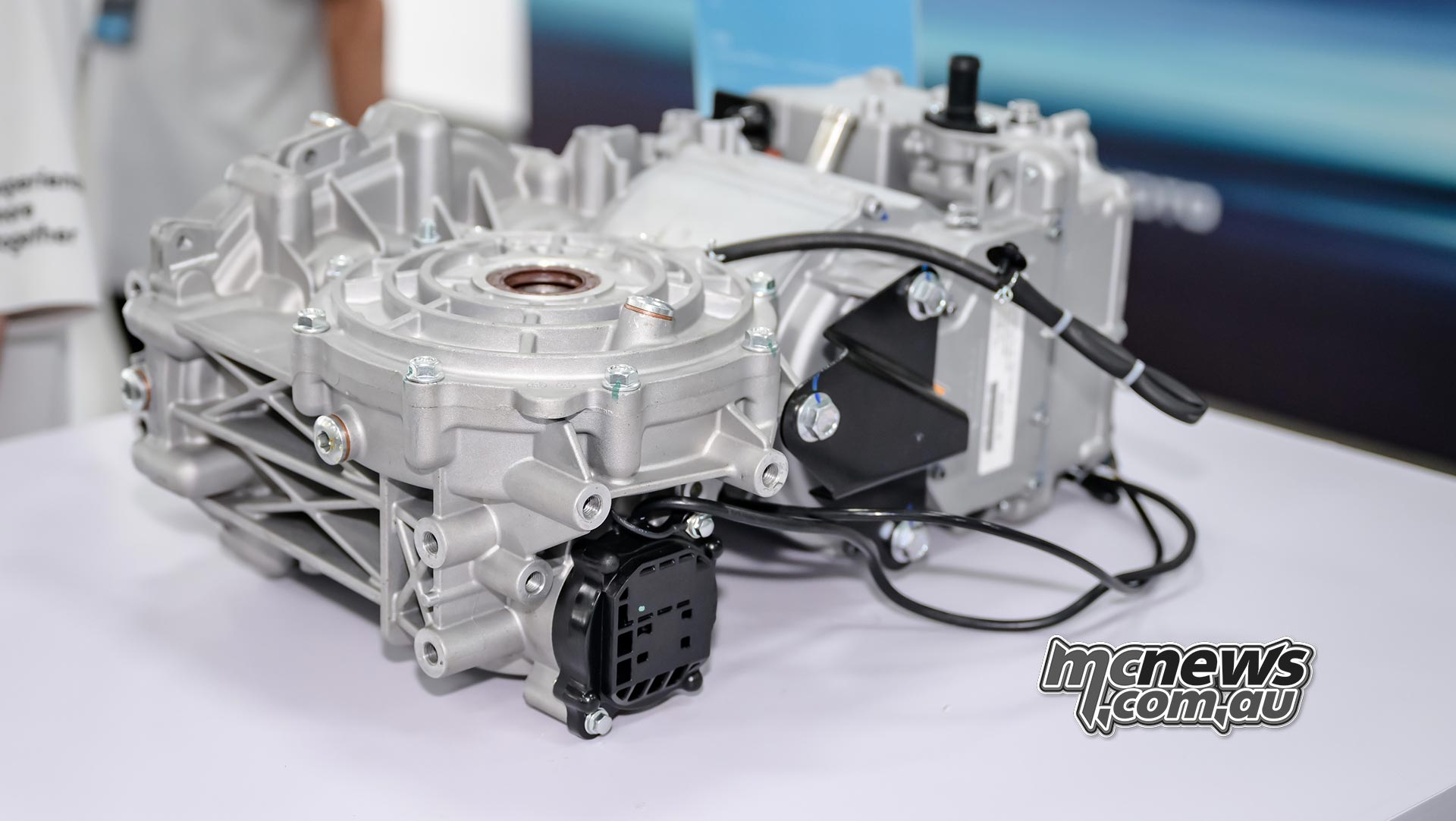
At the U6 EV workshop during our visit to Chinda, we had the three-in-one drive assembly out on the bench. You could see the wiring around the ribbed castings and where the splined output connects to the rest of the driveline. Those castings and mounting points have to fit under a working vehicle, where the unit needs cooling and has to keep dust and water out.
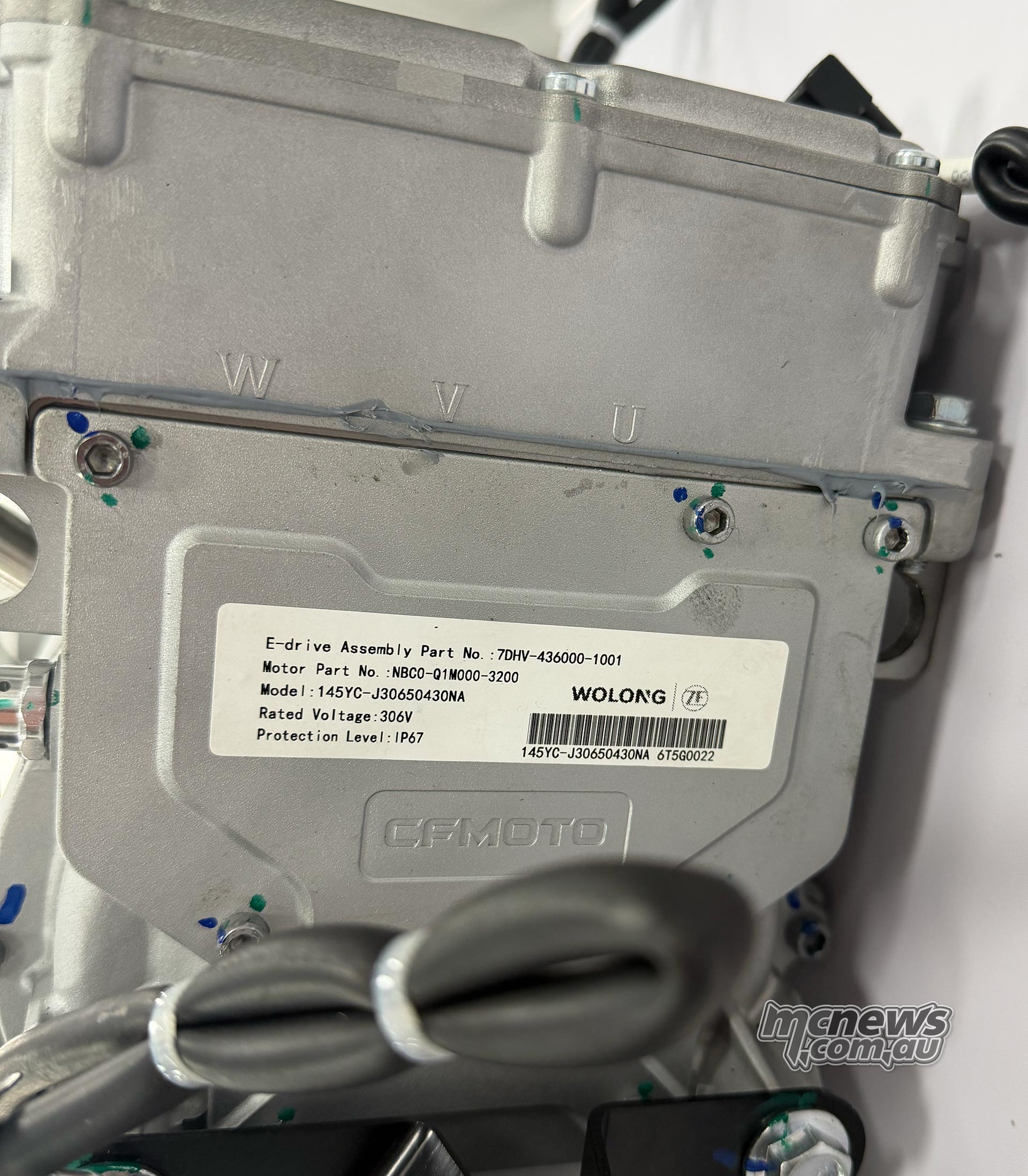
A WOLONG nameplate on a CFMOTO casting identified one of the suppliers behind the hardware.
The four-in-one display showed how much space CFMOTO can save by packaging more of the drive hardware together. On a two-wheeler, a smaller drive gives the engineers more room to work with when they’re fitting the battery.
Alongside the engine dynos we covered in our Hangzhou R&D feature, CFMOTO has dedicated equipment for testing electric powertrains. Jeff Xu, director of the Vehicle System Integration Centre within CFMOTO’s Group R&D Institute, explained the approach through an interpreter.
Jeff Xu
“We handle full forward development of engines, transmission, and e-drive, with both fuel and electric lines in parallel.”
When riders start asking for full-size electric bikes, I reckon CFMOTO will be in the box seat to give them ones worth buying.