

Triumph Speed Twin 1200 TFC limited to 750 worldwide
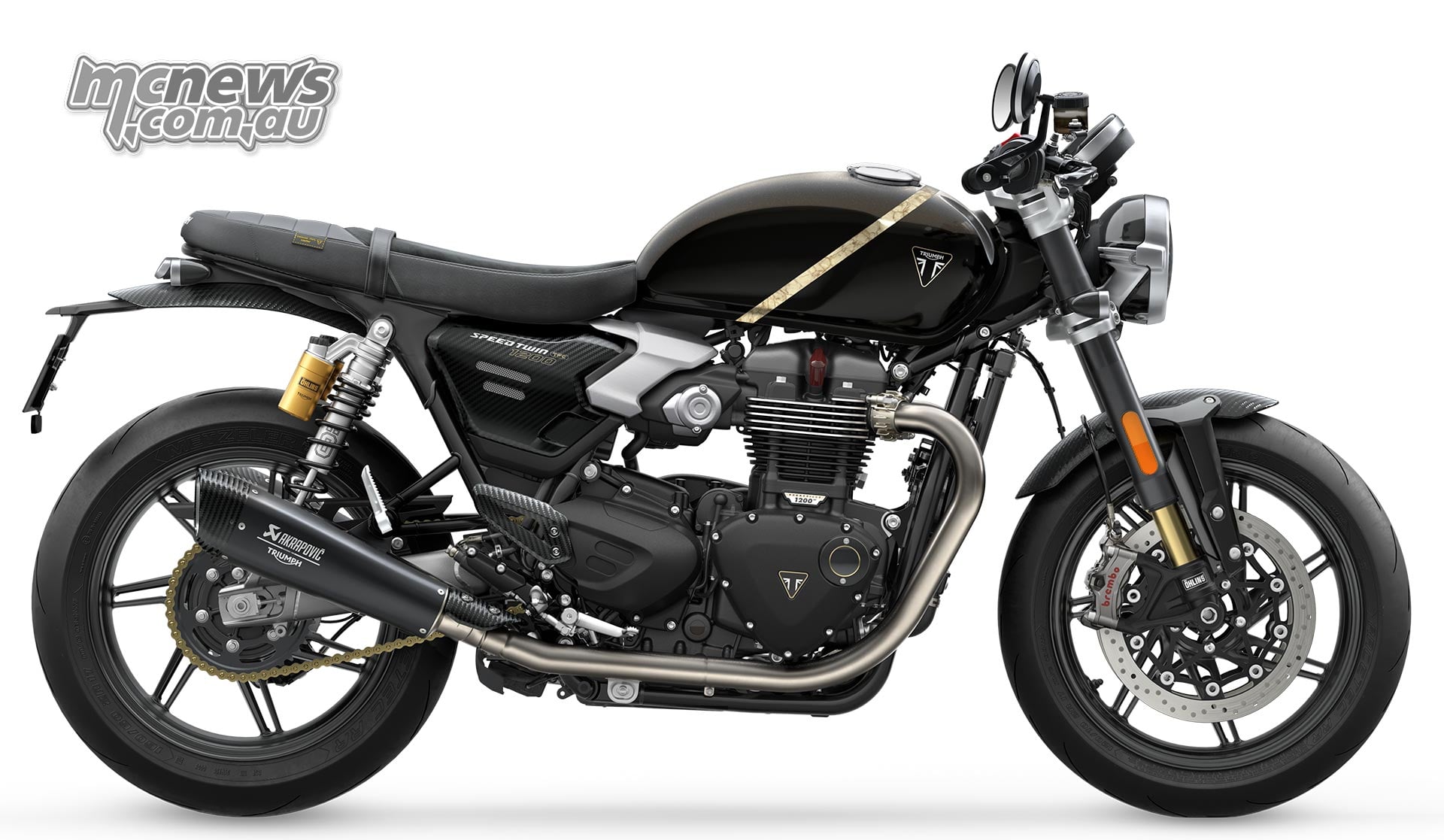
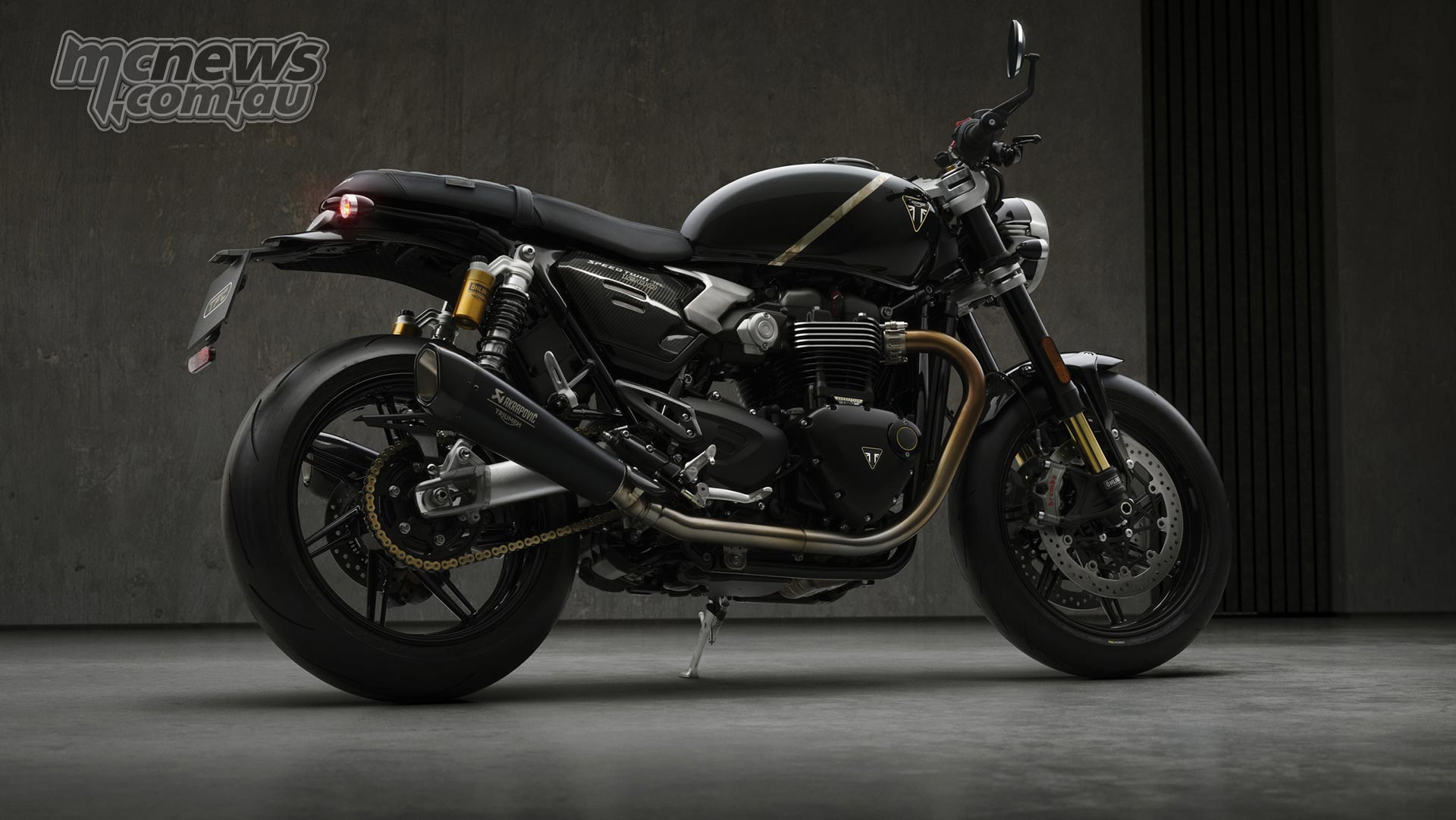
Triumph has revived its most exclusive badge for a fifth outing, with the new Speed Twin 1200 TFC taking the British brand’s flagship Modern Classic in a more committed, more exotic and considerably more expensive direction.
Announced in 2026 as a 2027 model, the Triumph Speed Twin 1200 TFC will be limited to 750 individually numbered motorcycles worldwide. Australian deliveries are due to begin in September, with the asking price set at $35,990 ride-away.
That makes it the most expensive Speed Twin yet, but also the closest Triumph has come to recreating the spirit of the discontinued Thruxton using its current-generation Bonneville platform.
Triumph Factory Custom comes full circle
The Triumph Factory Custom programme first kicked off in 2019 with a motorcycle that now appears particularly relevant: the Thruxton TFC.
Limited to 750 examples, the Thruxton TFC was far more than an elaborate paint-and-badge exercise. Triumph increased output to 109 PS and 115 Nm, reduced weight by five kilograms, added carbon-fibre bodywork, fully adjustable Öhlins suspension, premium Brembo brakes and a bespoke exhaust incorporating Vance & Hines titanium silencers.

The Rocket 3 TFC followed later in 2019, before Triumph turned its attention to the Bonneville Bobber for the first time in 2020.

The TFC badge then remained dormant for several years before returning on the 2025 Bonneville Bobber TFC. That second limited-edition Bobber established much of the visual and mechanical formula carried into this new Speed Twin: clip-on handlebars, carbon fibre, gold detailing, Öhlins suspension, upgraded Brembo brakes, Akrapovič silencers and a worldwide production run of 750.

Where the original Thruxton TFC arrived with a meaningful engine upgrade, the most recent Bobber TFC retained the standard model’s maximum power and torque figures. Instead, Triumph concentrated on throttle response, chassis specification, reduced weight, finish and exclusivity.
The Speed Twin 1200 TFC continues down that path.
A logical foundation
The latest Speed Twin 1200 was already a particularly strong starting point.
When we tested the current Speed Twin 1200 and 1200 RS, we came away impressed with how thoroughly Triumph had sorted both models. The Hinckley concern continues to do perhaps the best job in the business of combining old-school visual appeal with modern performance and convenience, and the latest Speed Twin is one of its finest examples.
Importantly, the regular Speed Twin 1200 was not made to feel like a compromised entry model. Its suspension and brakes worked well enough that we did not find ourselves constantly longing to get back on the more expensive RS when swapping between the two.
The RS nonetheless justified much of its premium through fully adjustable Öhlins rear shocks, adjustable Marzocchi forks, Triumph Shift Assist, Metzeler Racetec RR K3 tyres and superb Brembo Stylema braking package.
In particular, the feel delivered through the Brembo radial master cylinder and adjustable MCS lever was one of the highlights of our test. It was not only impressive when braking hard, but also provided tremendous satisfaction and progression during the lighter applications that make up most everyday riding.
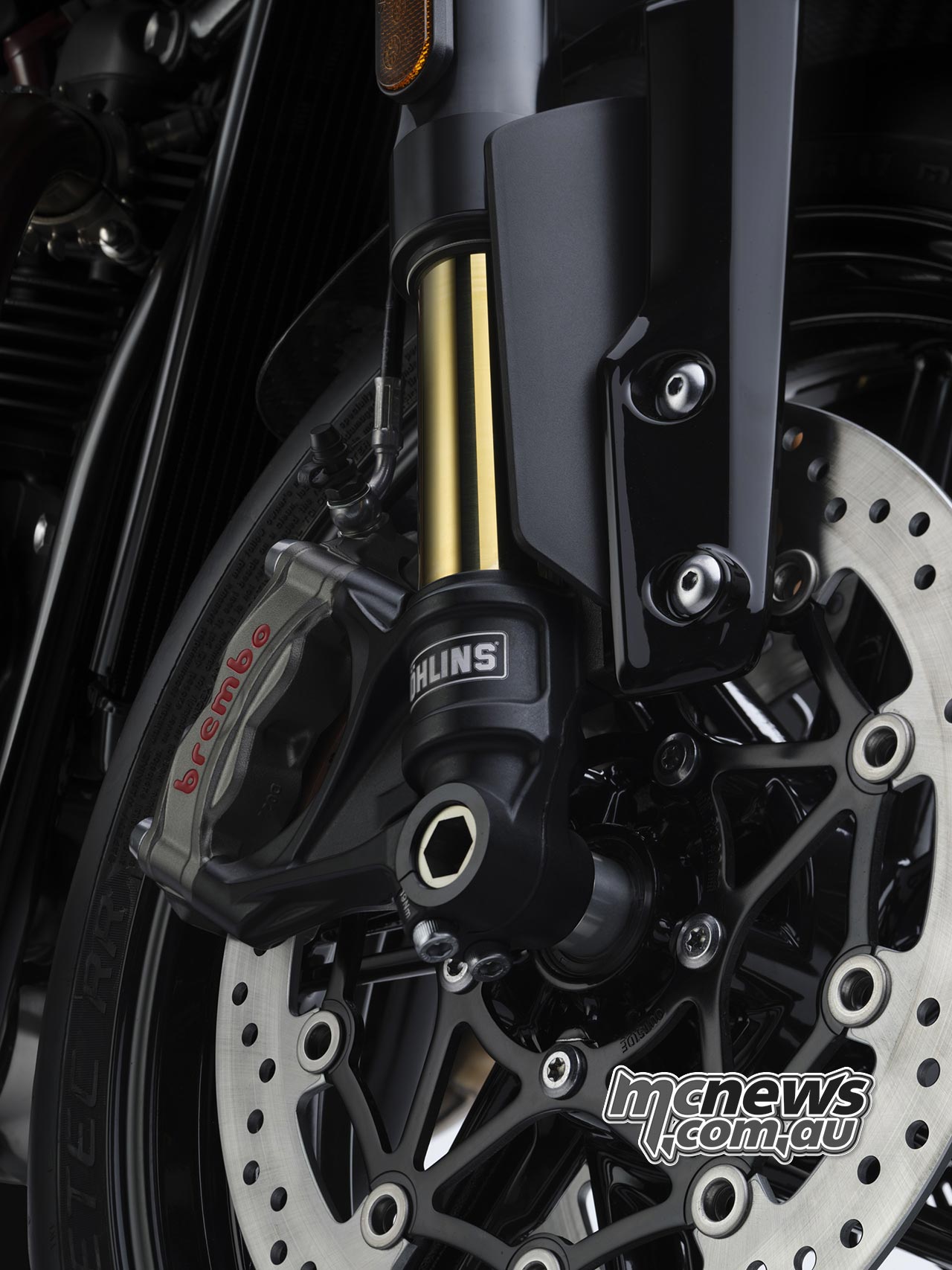
The Speed Twin 1200 TFC retains that same Stylema and MCS brake package, so its dynamic case over the RS rests primarily with its Öhlins front suspension, altered ergonomics and modest reduction in weight.
The Thruxton handover is complete
With the Thruxton now discontinued, the Speed Twin 1200 RS had already inherited the title of sportiest motorcycle in Triumph’s Bonneville family.
The TFC takes that transition considerably further.
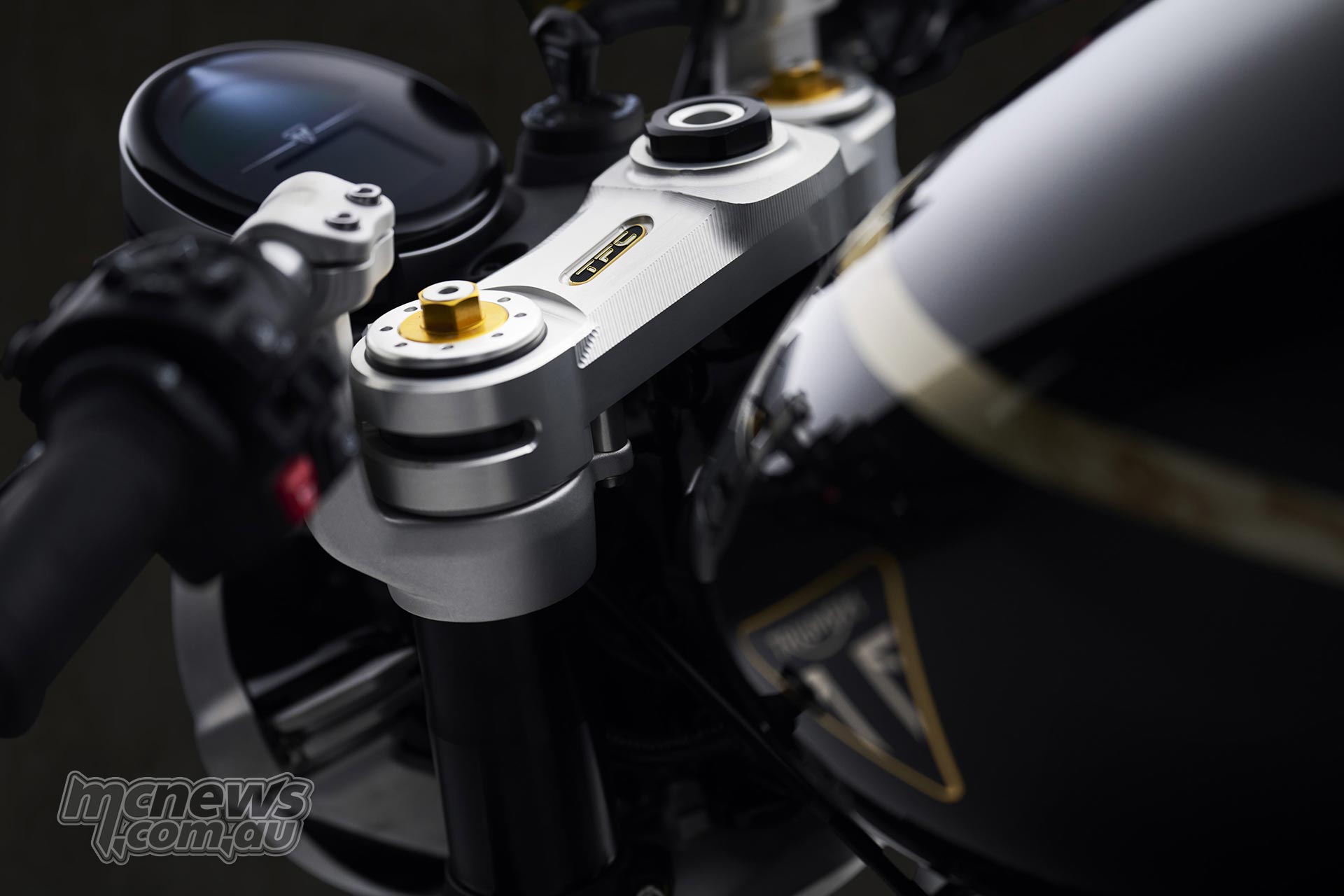
Low-set clip-on handlebars are mounted beneath a billet aluminium top yoke, while rearset footpegs create a more committed rider triangle than that of the RS. Triumph says the combination strengthens the rider’s connection with the front of the motorcycle and provides more precise control.
That should also make the TFC a more physically demanding proposition than the standard and RS models. Neither of those put excessive weight through the wrists during our test, and both retained enough comfort and practicality to contemplate a bit of touring.
The clip-ons and rearsets should bring greater front-end involvement, but buyers can reasonably expect to surrender some of the easy-going versatility that made the regular Speed Twin 1200 so appealing.
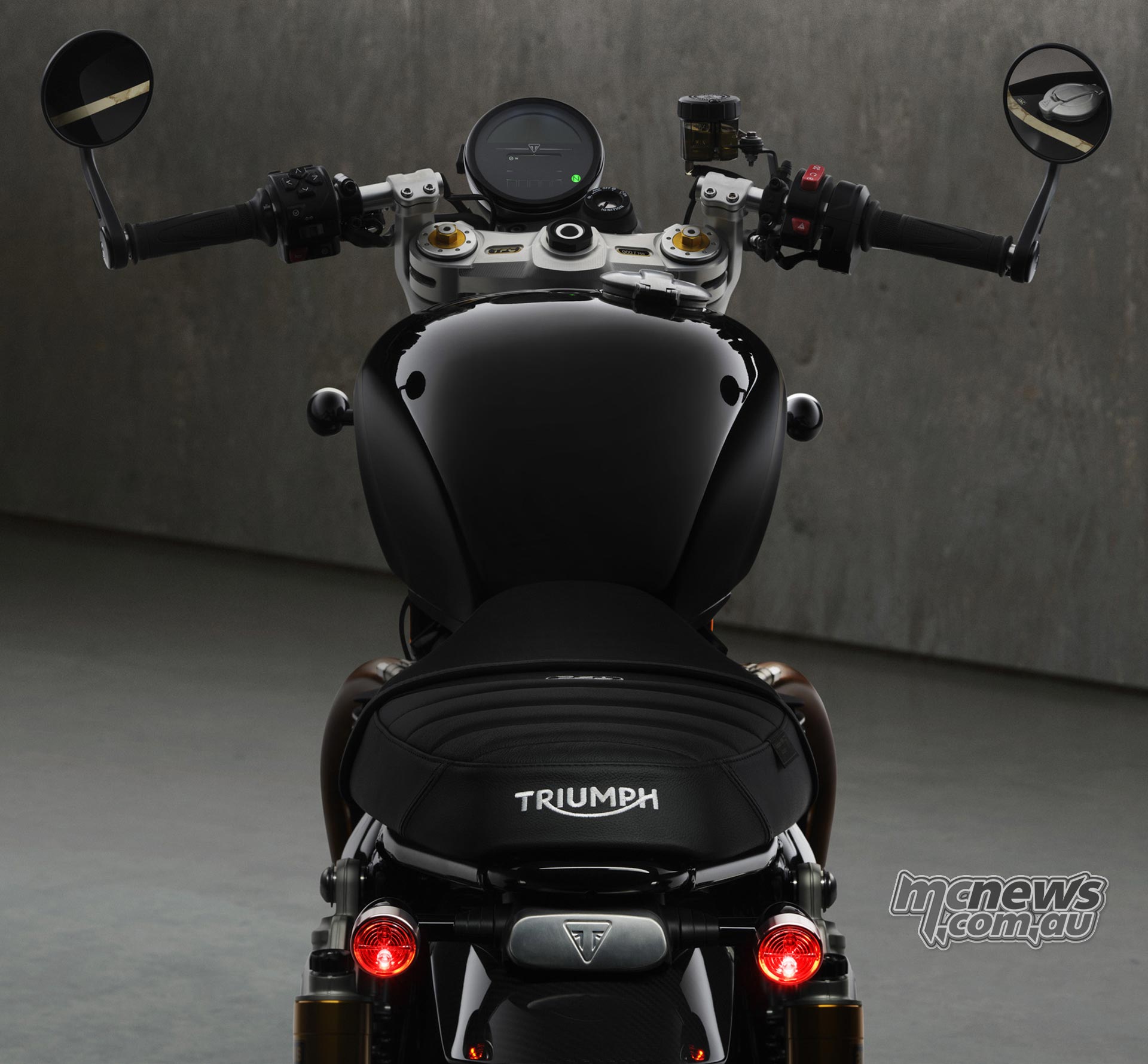
In other words, the TFC is not merely a more expensive RS. Its riding position pushes the Speed Twin much closer to the café-racer brief previously occupied by the Thruxton.
Full Öhlins suspension
The most meaningful chassis upgrade is the adoption of fully adjustable Öhlins suspension at both ends.
While the Speed Twin 1200 RS combines adjustable 43 mm Marzocchi forks with fully adjustable Öhlins twin rear shocks, the TFC gains 43 mm Öhlins upside-down forks adjustable for preload, compression and rebound damping.
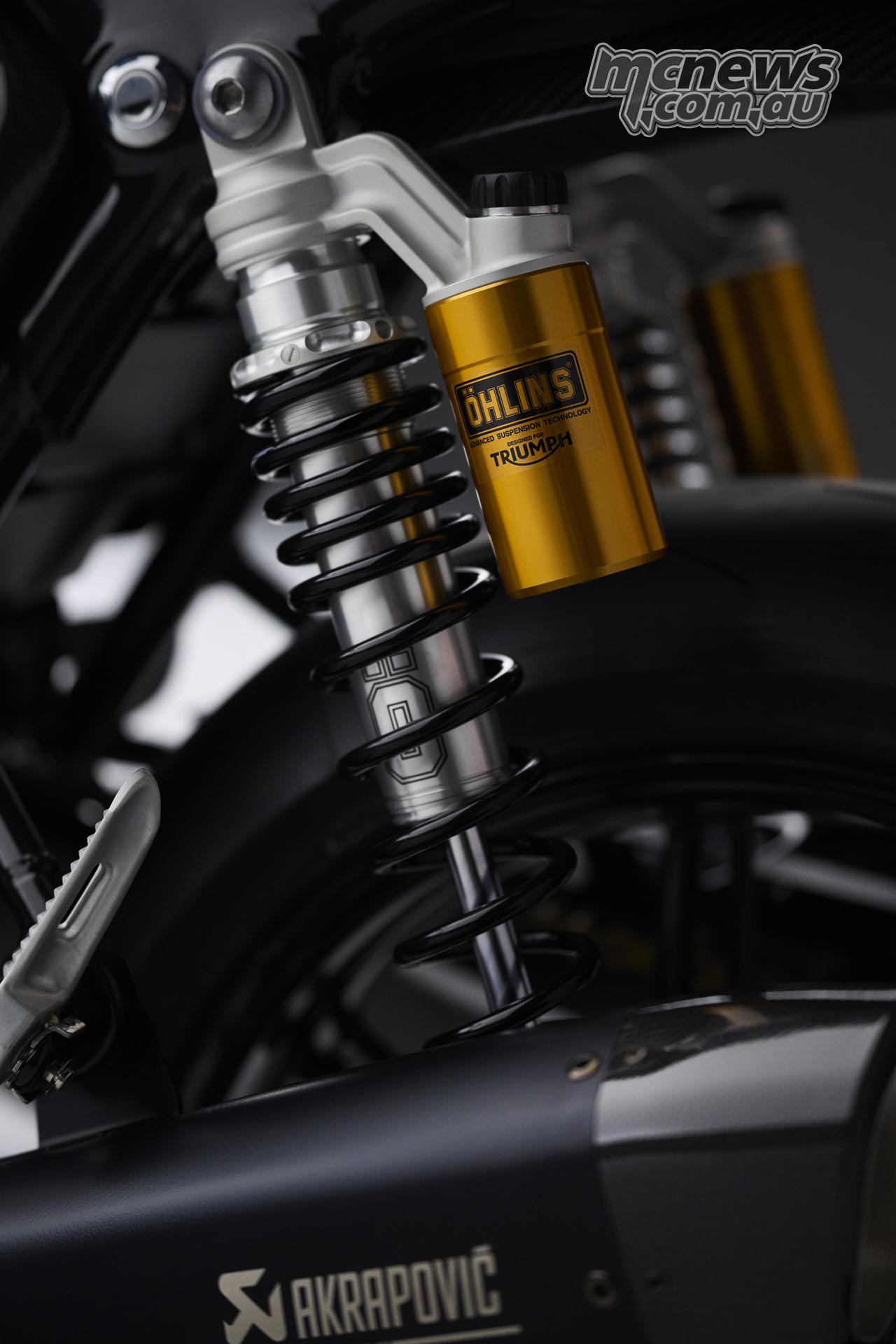
Öhlins twin rear suspension units with external reservoirs remain, offering the same range of preload, compression and rebound adjustment.
Wheel travel measures 120 mm at the front and 123 mm at the rear, while the steering geometry is essentially unchanged from the RS at 22.6 degrees of rake, 92 mm of trail and a 1414 mm wheelbase.
Brembo Stylema M4.30 radial calipers bite twin 320 mm floating discs, operated through the Brembo radial master cylinder and MCS lever that impressed us so much on the RS.
The seven-spoke cast aluminium wheels carry the familiar 120/70 R17 front and relatively modest 160/60 R17 rear tyre sizes. That narrow rear helped make both existing Speed Twins exceptionally eager to change direction, while the Racetec RR K3 profile contributed to the RS feeling slightly keener to roll onto the edge of the tyre. Those same Racetec RR K3 tyres are fitted to the TFC.
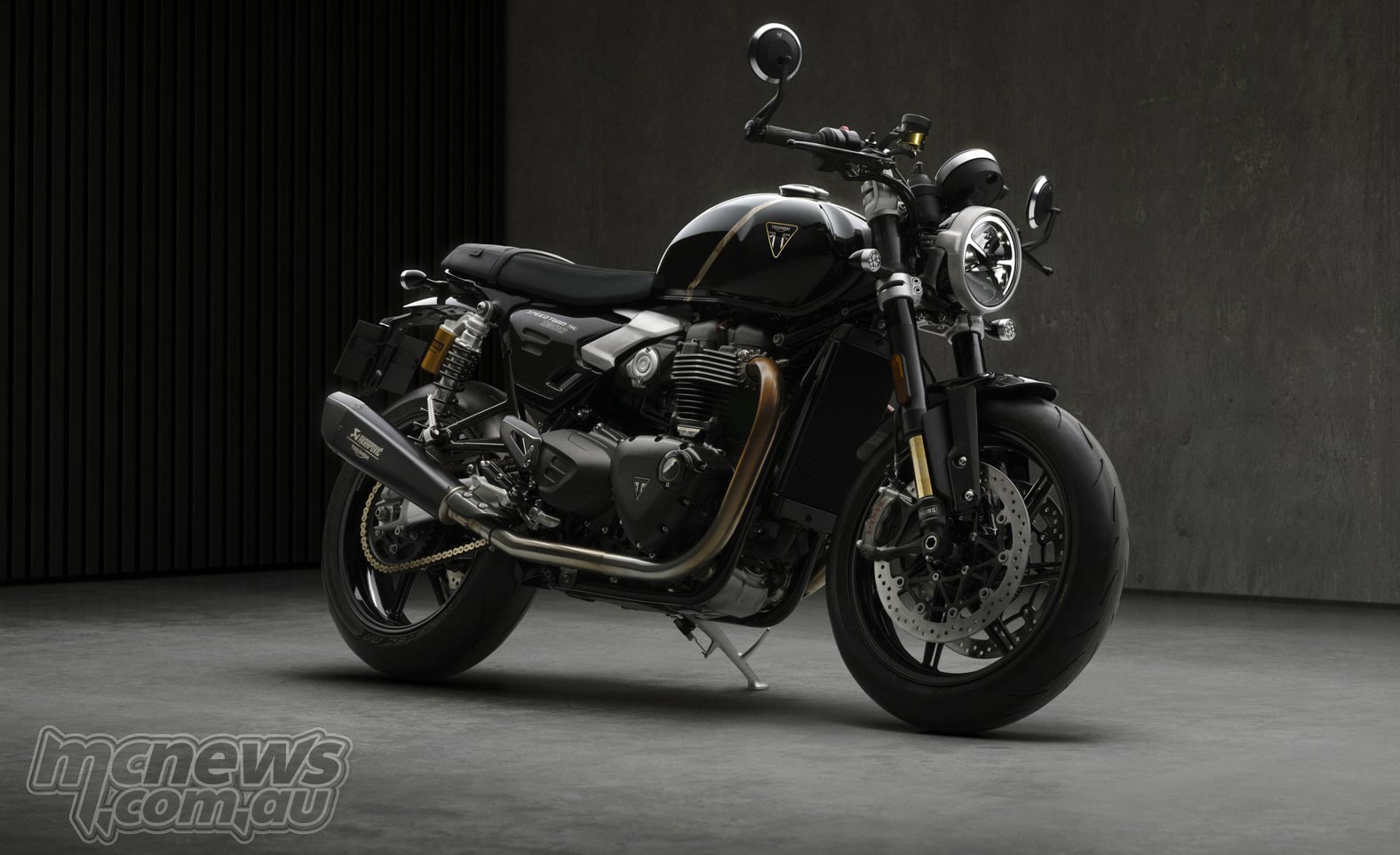
Carbon and titanium trim two kilograms
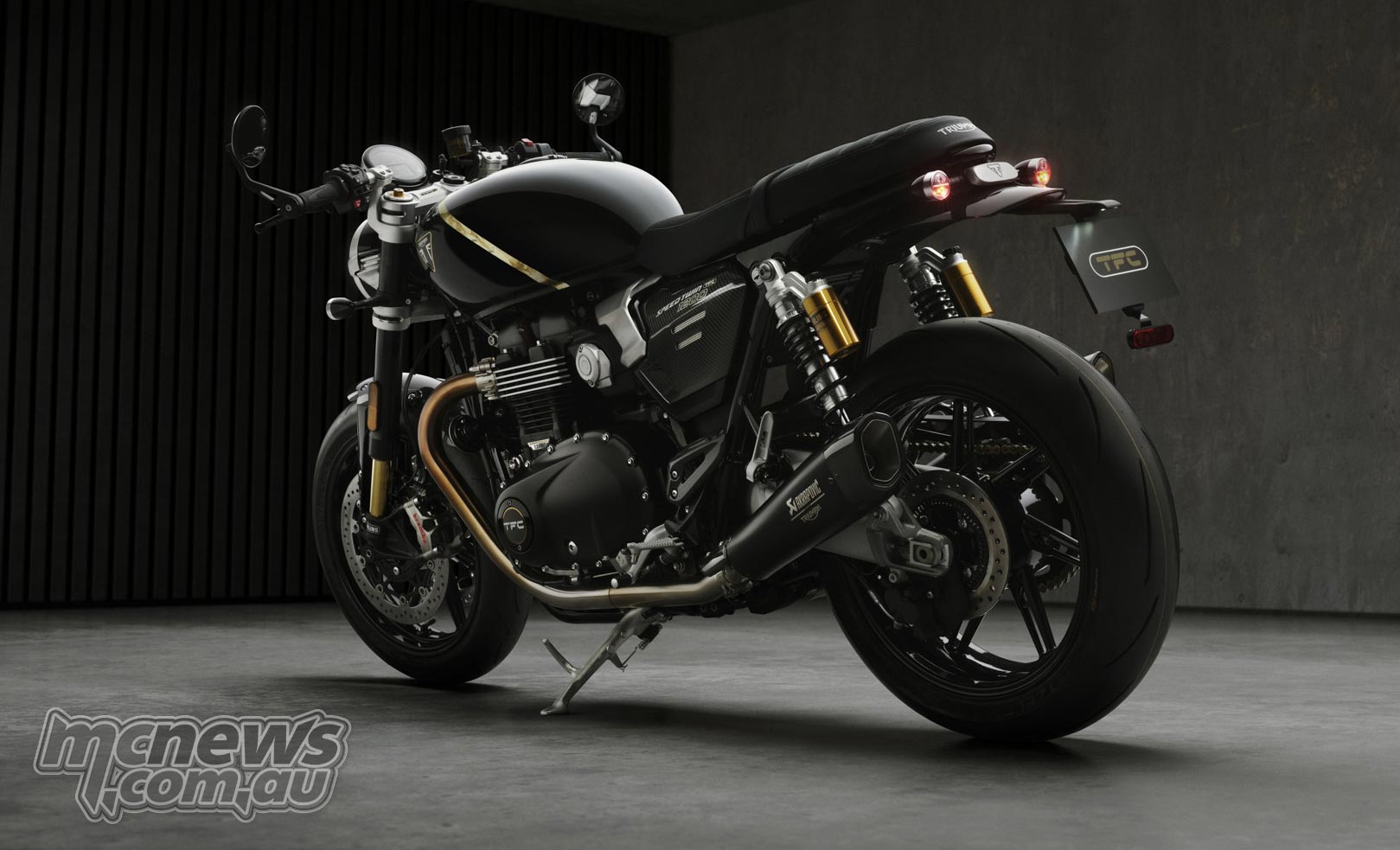
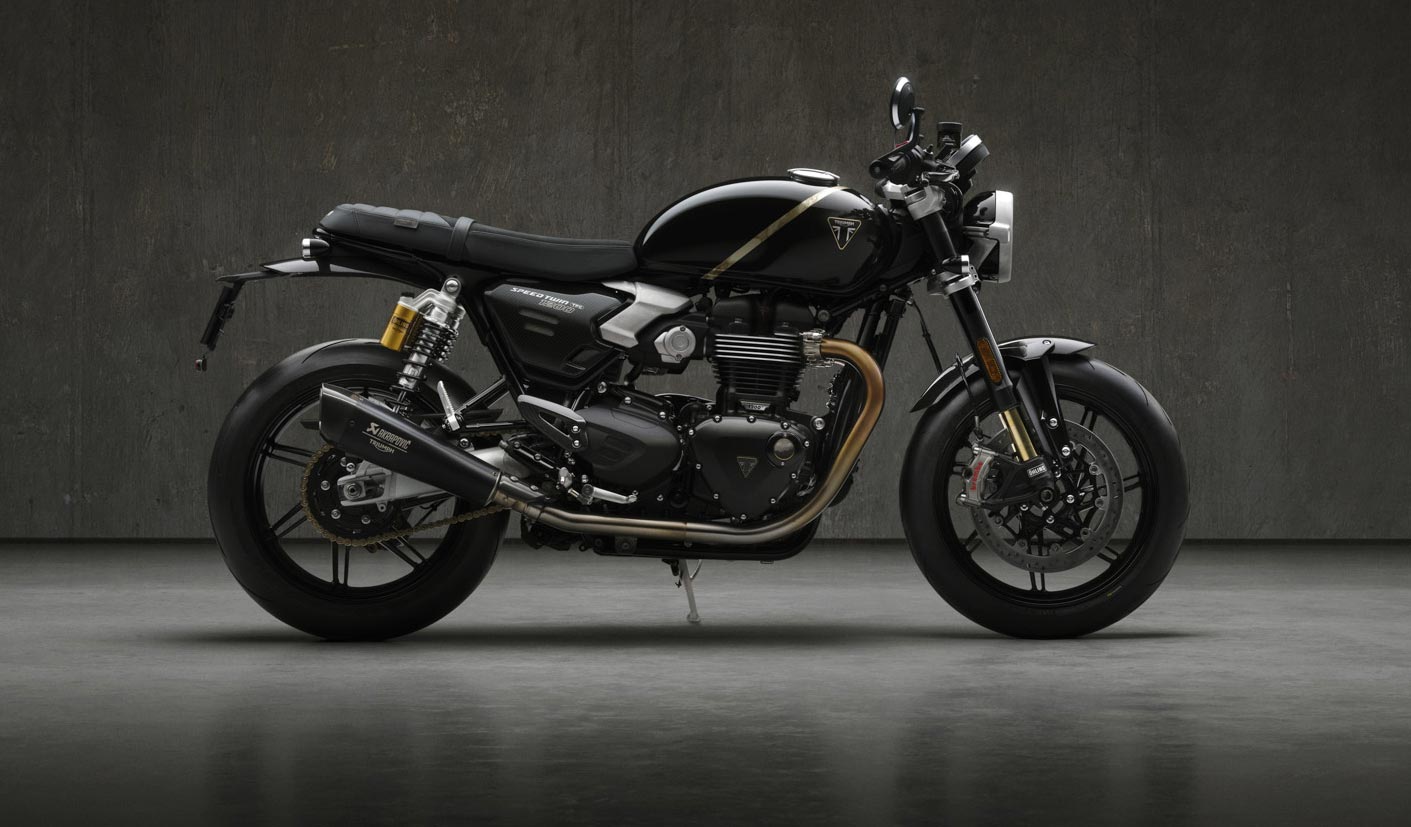
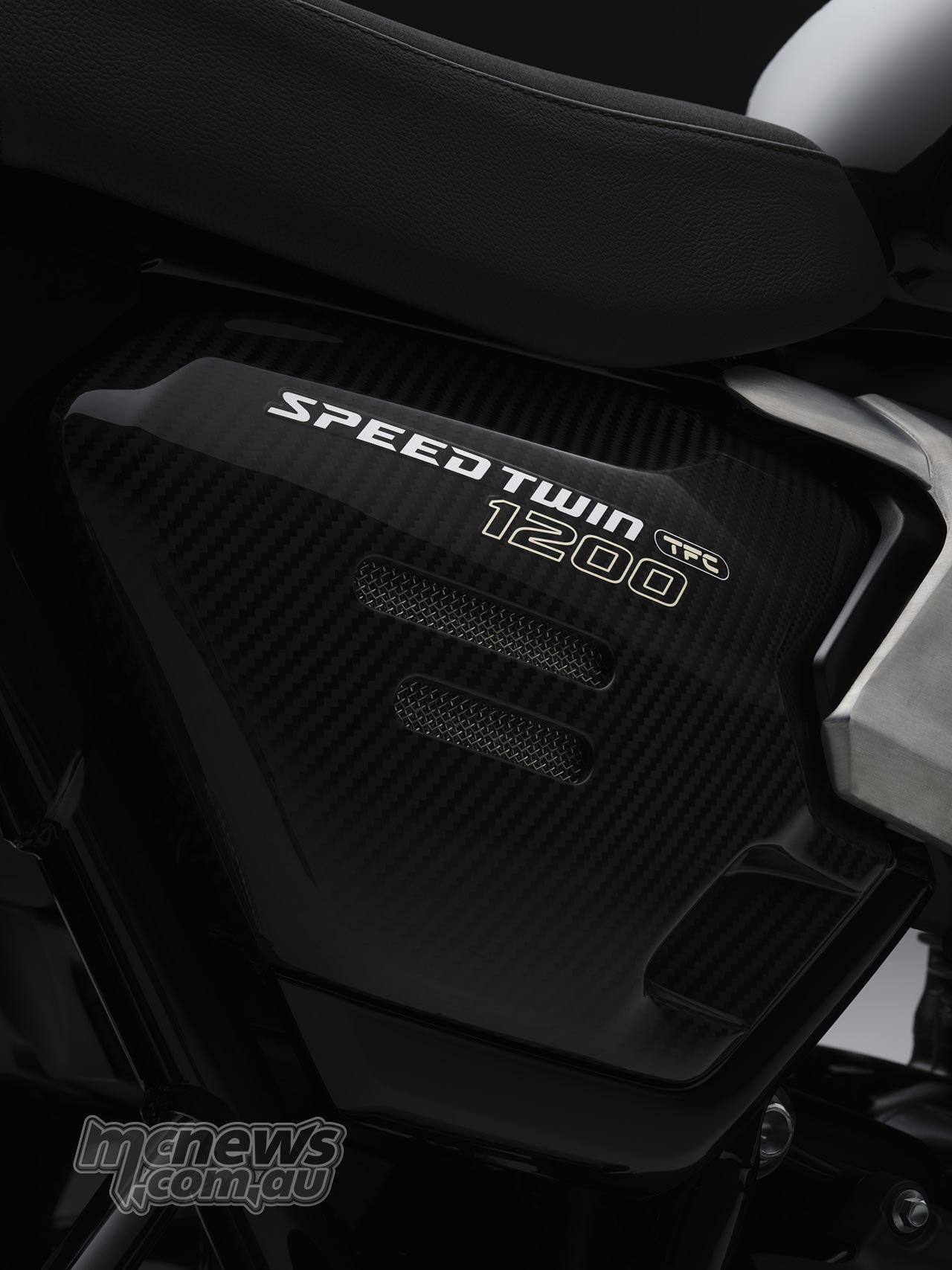
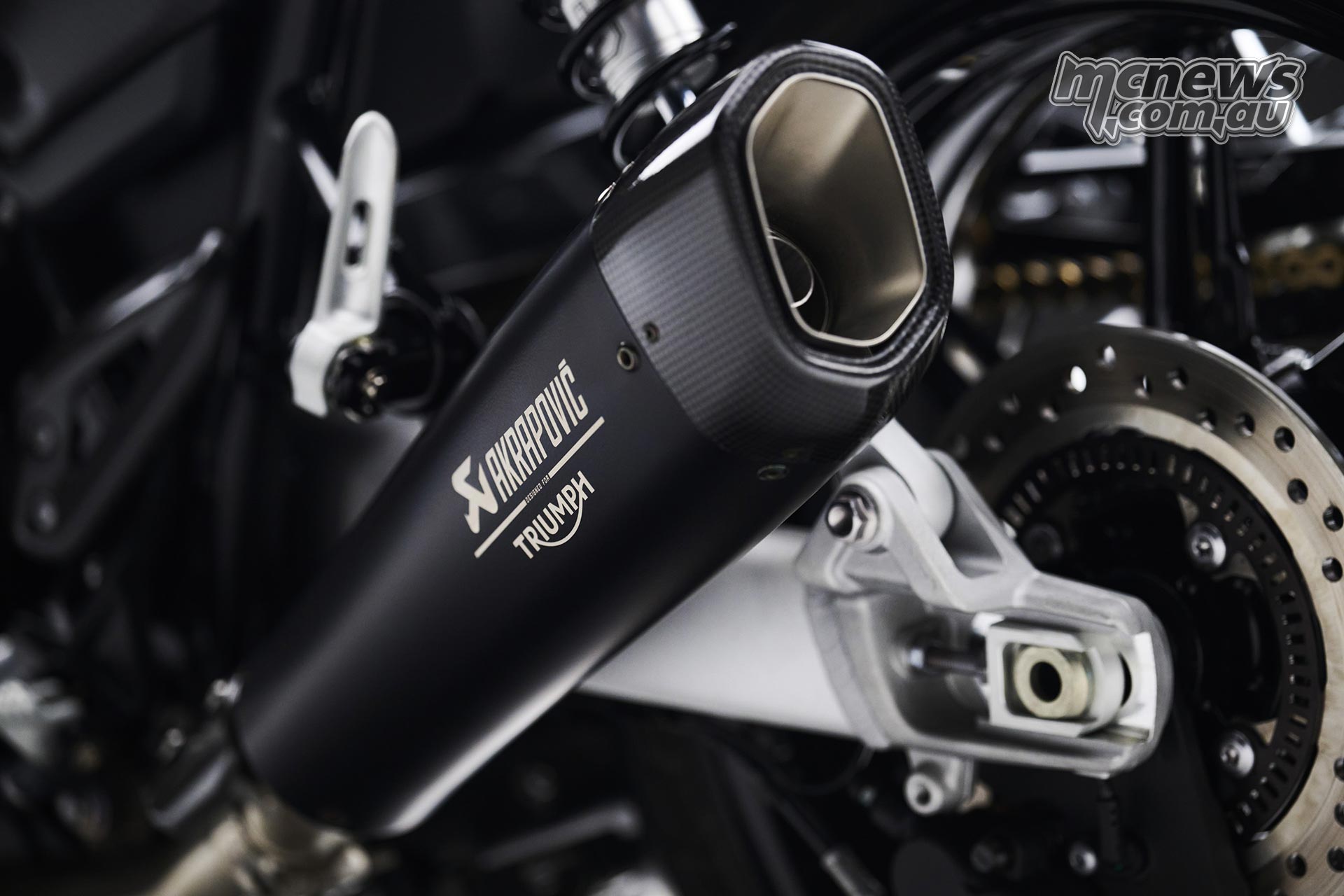
Gloss-lacquered carbon fibre is used for the front and rear mudguards, sculpted side panels, heel guards and other detailing, while the standard exhaust silencers make way for a pair of Akrapovič titanium megaphones with carbon-fibre end caps.
Despite that use of lightweight materials, the TFC’s claimed wet weight is 214 kg – only two kilograms less than the 216 kg Speed Twin 1200 RS.
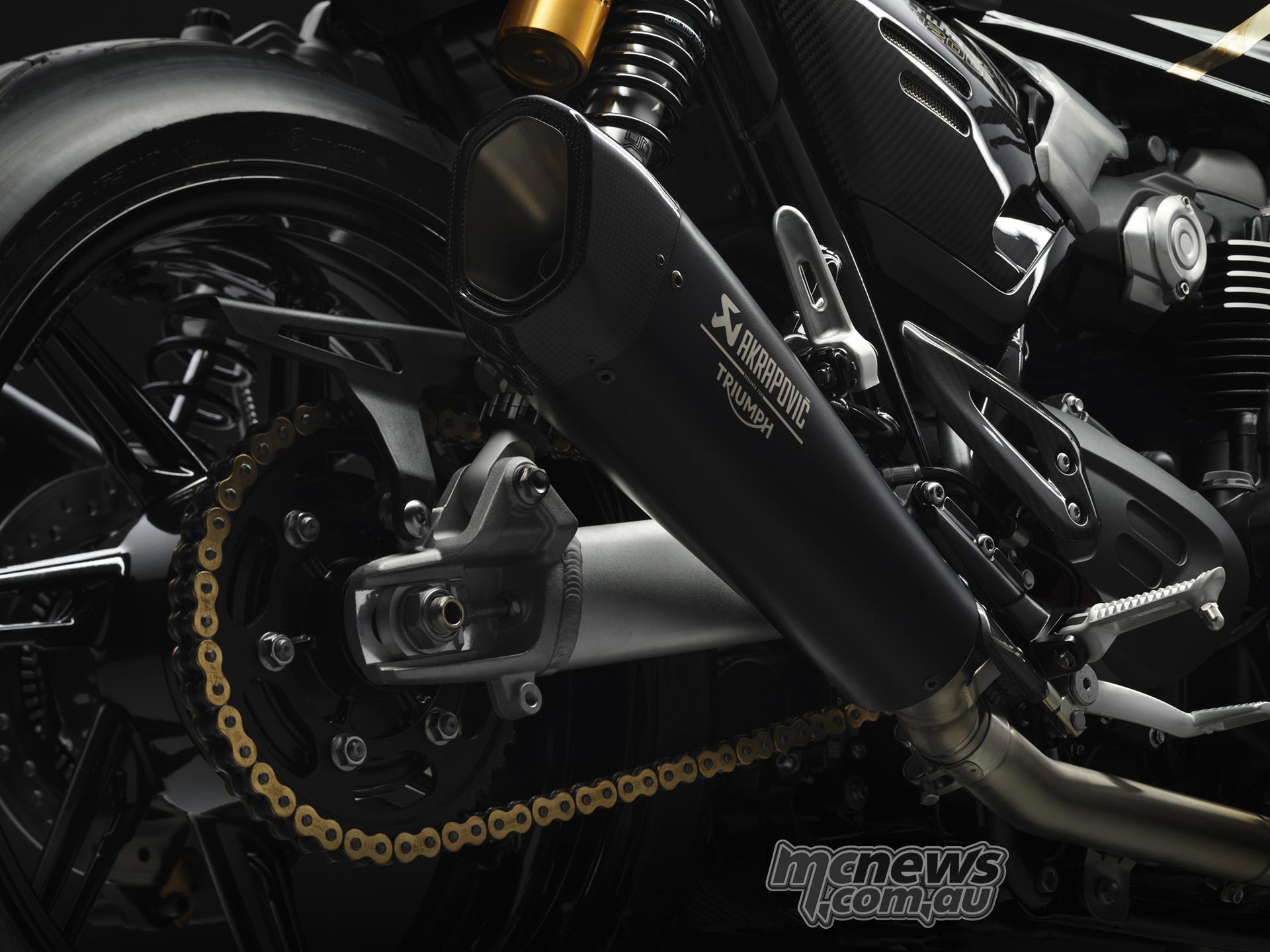
That is a useful saving, but it is considerably less dramatic than the five-kilogram reduction achieved by the original Thruxton TFC, or the greater-than-five-kilogram saving Triumph claimed for the latest Bobber TFC.
The Akrapovič system may prove more significant to the riding experience through sound than outright performance. We have always been fond of the Speed Twin’s traditional twin-pipe arrangement, and the black titanium megaphones should add some welcome theatre to the 270-degree parallel-twin soundtrack.
No increase in engine output
Unlike the original Thruxton TFC, the new Speed Twin 1200 TFC does not receive a claimed increase in power or torque.
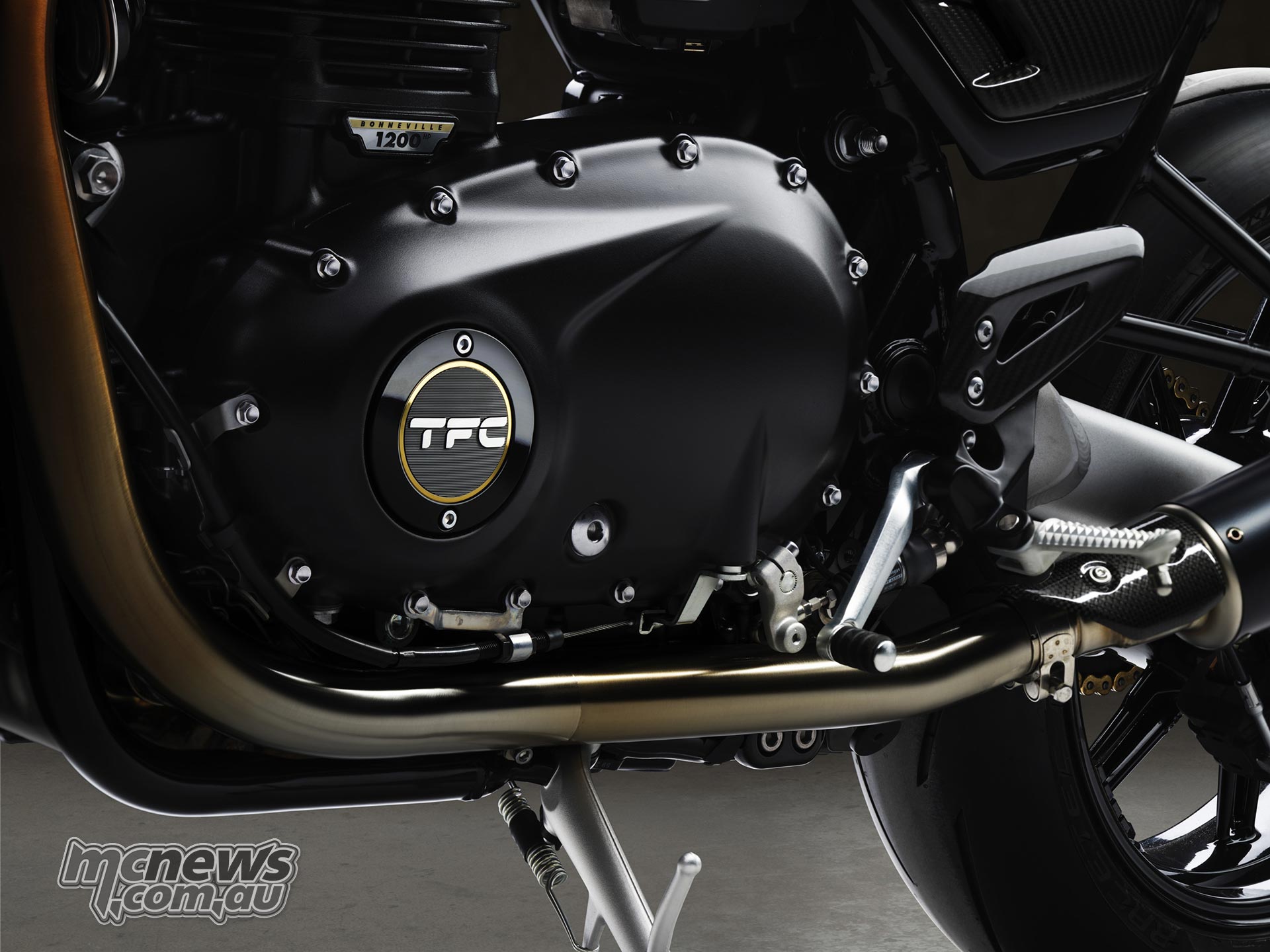
The familiar 1200 cc High Power Bonneville parallel-twin produces 105 PS – or 103.5 horsepower – at 7750 rpm and 112 Nm at 4250 rpm. Those figures are identical to the Speed Twin 1200 RS.
That is not necessarily a major shortcoming. The latest low-inertia version of Triumph’s big twin is flexible, responsive and increasingly willing to rev, while still providing enough bottom-end torque to be ridden as lazily or as enthusiastically as the mood dictates.
However, buyers expecting the TFC badge to unlock another layer of engine performance will not find it here. The premium is being spent on chassis equipment, ergonomics, materials, finish and rarity, rather than additional horsepower.
Triumph Shift Assist is standard, providing clutchless upshifts and rev-matched downshifts through the six-speed transmission.
Sport, Road and Rain riding modes alter throttle response and traction-control strategies, while lean-sensitive Optimised Cornering ABS and traction control remain standard.
Obsidian Gold and numbered detailing
Every Speed Twin 1200 TFC will be finished in a single Obsidian Gold colour scheme. Triumph describes the treatment as a metallic black base infused with gold metal flakes, intended to reveal a subdued glow as the available light changes.
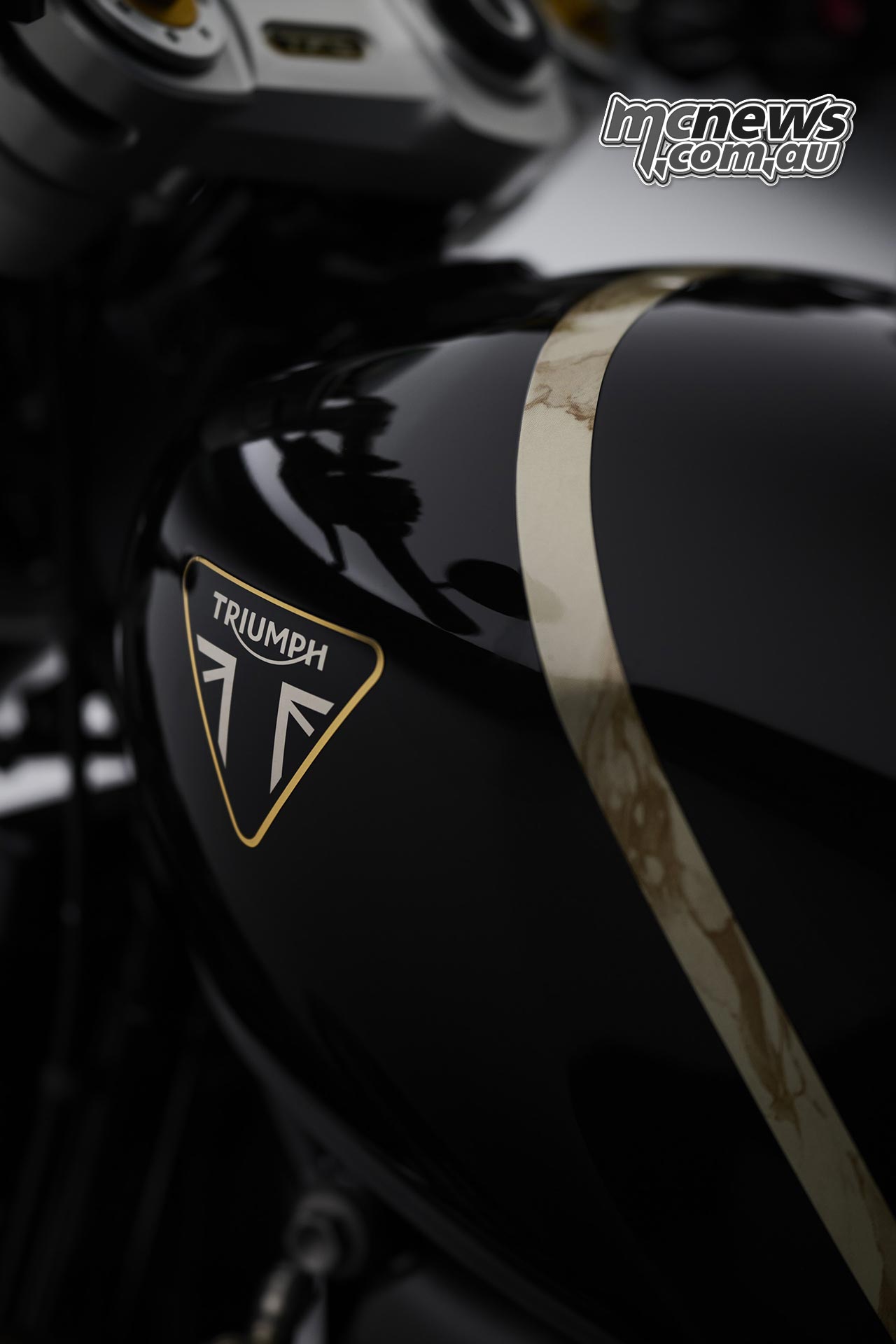
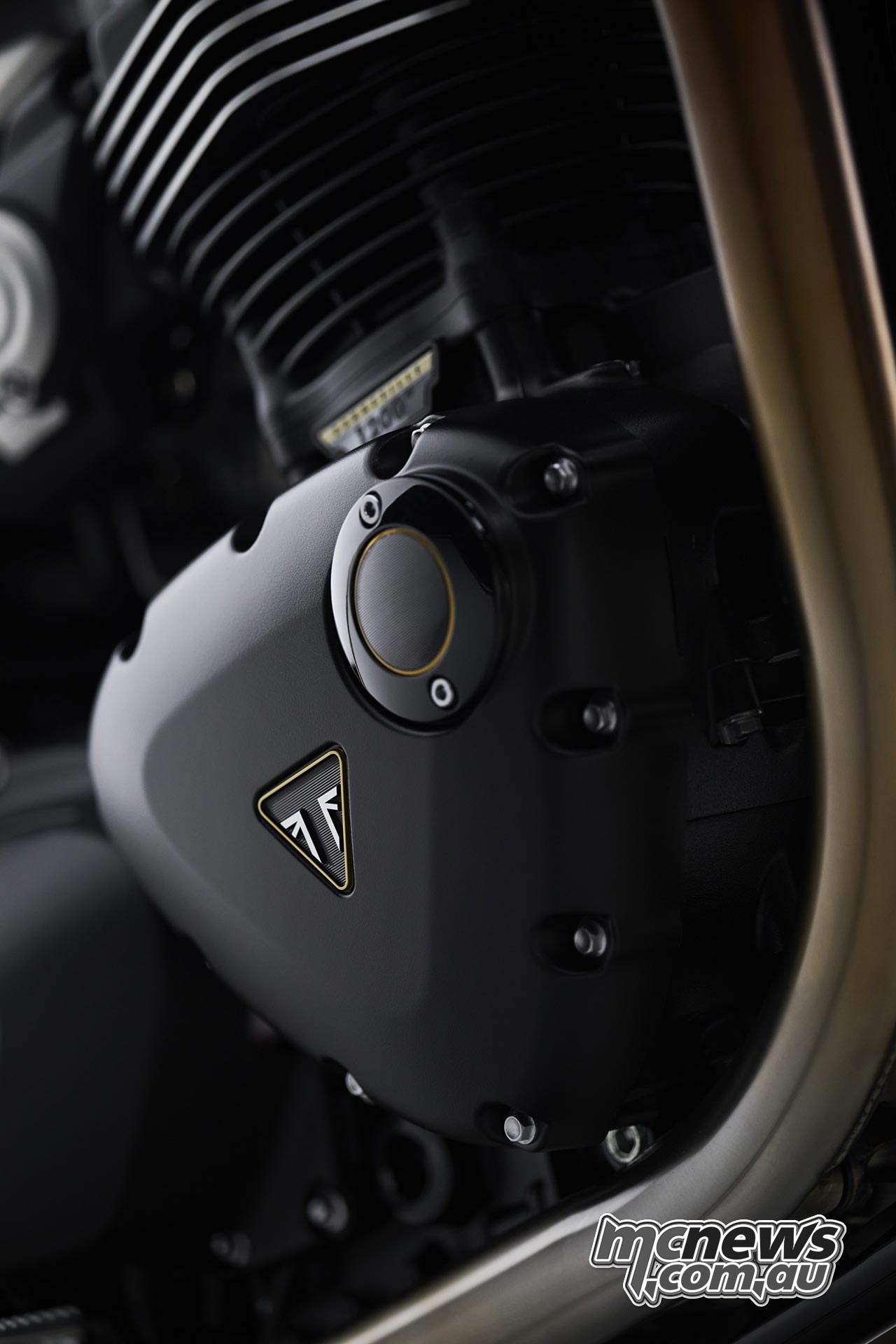
The paint is complemented by gold-anodised fork lowers and suspension adjusters, a gold-finished drive chain and an extensive array of blacked-out components, including the fork legs, rear sprocket, control plates and engine covers.
The one-piece bench seat combines black leather with high-grip sports suede, ribbed detailing and hand stitching. Machined bar-end mirrors and compact multifunction rear lights complete the stripped-back profile.
Each motorcycle carries its individual build number and TFC emblem laser-etched into the billet aluminium top yoke. A signed Certificate of Authenticity, branded indoor motorcycle cover and waterproof seat cover are also included.
The cockpit retains the existing round instrument housing, combining an LCD display with an integrated colour TFT screen. The layout is reasonably intuitive and carries plenty of information, although we found that direct sunlight could make the small display difficult to read during our road test.
A USB-C charging socket is also standard.
An $8700 premium over the RS
Triumph Australia currently lists the Speed Twin 1200 RS from $27,290 ride-away, making the new TFC a substantial $8700 step at its $35,990 ride-away asking price.
That premium cannot be justified through the traditional measures of power, torque or outright weight reduction. The RS already includes the same excellent brakes, rear suspension, quick-shifter, electronic rider aids and fundamental engine performance.
The TFC instead asks buyers to place a considerable value on its Öhlins forks, Akrapovič exhaust, carbon bodywork, bespoke ergonomics, detailed finish and numbered exclusivity. If purchased separately, no doubt that sum would amount to a bigger cut from your credit card than stumping up the TFC premium at the dealership and riding away with it all covered by Triumph’s three-year warranty.
For riders simply looking for the best performance-per-dollar, the Speed Twin 1200 RS remains hard to look past. It was already a well-sorted, rewarding and devilishly handsome motorcycle. And even in base form the Speed Twin 1200 works very well indeed.
The TFC is aimed at a different buyer: someone seeking the rarest and most visually elaborate version of the platform, and perhaps the closest modern replacement yet for the departed Thruxton.
Only 750 will be produced worldwide, and Triumph has not disclosed how many will reach Australia. Orders are open now at the Triumph Motorcycles Australia website, with Australian deliveries expected to begin in September 2026.
2027 Triumph Speed Twin 1200 TFC Specifications
| 2027 Triumph Speed Twin 1200 TFC Specifications | |
| Engine | Liquid-cooled parallel-twin, eight-valve, SOHC, 270-degree firing order |
| Capacity | 1200 cc |
| Bore x stroke | 97.6 x 80 mm |
| Compression ratio | 12.1:1 |
| Maximum power | 105 PS / 103.5 hp / 77.2 kW at 7750 rpm |
| Maximum torque | 112 Nm at 4250 rpm |
| Fuel system | Multipoint fuel injection, electronic throttle control |
| Riding modes | Sport, Road and Rain |
| Exhaust | Stainless-steel 2-into-2 system with twin Akrapovič titanium silencers and carbon-fibre tips |
| Clutch | Wet multi-plate slip-and-assist |
| Transmission | Six-speed with Triumph Shift Assist |
| Final drive | X-ring chain |
| Frame | Tubular steel with steel cradles |
| Swing-arm | Twin-sided fabricated aluminium |
| Front suspension | 43 mm Öhlins inverted forks, adjustable for preload, compression and rebound damping; 120 mm travel |
| Rear suspension | Öhlins twin shocks with external reservoirs, adjustable for preload, compression and rebound damping; 123 mm travel |
| Front brakes | Twin 320 mm floating discs, Brembo Stylema M4.30 radial calipers, Brembo radial master cylinder and MCS lever, cornering ABS |
| Rear brake | Single 220 mm fixed disc, Nissin two-piston floating caliper, cornering ABS |
| Front wheel | Seven-spoke cast aluminium, 17 x 3.5 inches |
| Rear wheel | Seven-spoke cast aluminium, 17 x 5.0 inches |
| Front tyre | Metzeler Racetec RR K3, 120/70 R17 |
| Rear tyre | Metzeler Racetec RR K3, 160/60 R17 |
| Length | 2073 mm |
| Width | 795 mm |
| Height without mirrors | 1055 mm |
| Seat height | 810 mm |
| Wheelbase | 1414 mm |
| Rake | 22.6 degrees |
| Trail | 92 mm |
| Wet weight | 214 kg |
| Fuel capacity | 14.5 litres |
| Claimed fuel consumption | 4.4 litres per 100 km |
| Service interval | 16,000 km or 12 months |
| Production | 750 individually numbered motorcycles worldwide |
| Australian availability | September 2026 |
| Australian price | $35,990 ride-away |