
Ducati - 2001
SuperBike Range
Thumbnail pictures can be
found at the bottom of the page, when clicked these open the full size image
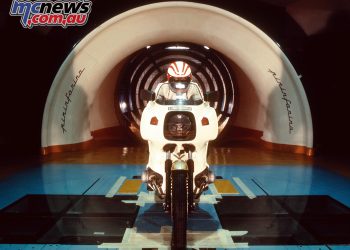
| INTRODUCTION "There is no time to celebrate or sit back and enjoy one's success in the hi-tech world of Superbike". (Massimo Bordi) When competitors started to close in on the unbeatable Desmoquattro engine in World Superbike races, Ducati engineers set to work on the original project, which, extensively upgraded, resulted in a totally new engine. This led to the creation of the 996 R and an engine that while retaining the traditional 90° V architecture of Ducati twins, also features totally revised thermodynamics, which open up a totally new performance potential. In 2001, the 996 R will be available in a limited edition, probably 500 units. This is undoubtedly the range-topping model of the Superbike family and is intended for those sports riding enthusiasts who love to own an exclusive machine. THE RANGE The 996R has been developed around its extraordinary engine to efficiently tap all of its power potential both in the road version - approved to the most stringent standards - and in the upgraded racing version. The Ducati 996R uses strictly hi-tech components, featuring a superbly streamlined carbon fairing developed after extensive testing in the wind chamber and a substantially slimmed down design. 2001 also sees the debut of the 996S, which combines the 120HP+ Desmoquattro engine inherited from the 996SPS 2000, with an accessible road-type chassis design that is also prone to sports-like use as well as a twin-seat option. The 996S was created to enable a broader group of enthusiasts to experience the emotion of riding a Ducati twin offering excellent performance, top quality execution and superior fittings. The gutsy tradition of Ducati Superbikes made accessible for everyone to enjoy: this is how the 996S writes a new chapter in the history of the Superbikes. The range is supplemented with the basic 996, which has been improved in several technical aspects as well as performance by a new Öhlins rear shock absorber (like the 996S). The 2001 748 range includes three models, which made their first appearance in 2000. The range-topping model is still the R version, one of the most refined, high-performance motorcycles in this capacity and one of the stars of the Supersport World Championship. The 2001 748R has been thoroughly updated to further its sports-like personality and enhance its winning potential in top-level racing. The 748S and basic 748 have undergone detail refinements, whereas mechanics and performance are unchanged. 748 colour range is: 996 colour range is: NEW FEATURES 996 R 996S 996 748R 748 THE PRODUCT Never in the history of motorcycle racing has an engine dominated the scene for so long as the Ducati Desmoquattro twin-cylinder. The Ducati engineers' prompt decision to launch a new engine project when 996R's were still dominating the Superbike World Championship was undoubtedly far-sighted. This project resulted in the 996R, a bike that combines the traditional Desmoquattro look and architecture with an extremely advanced technology and thermodynamic concept, making a giant leap forward in terms of performance, even in the road-going version. Others in the ranger are as follows: 996S It retains the mechanical construction of the 996SPS, except for the use of titanium connecting rods, and the result is a vigorous engine characterised by great vivacity, amazing power response in the low-to-midrange and very smooth progression. The new, more compact 1.6M CPU controls the integrated electronic system and takes about 2 kg off the bike in combination with the new sealed-for-life battery. 996 Its 112 HP coupled with easy-to-tame output capacity and total mechanical reliability make for an attractive combination for those who have no racing ambitions and would be content to join the exclusive top-capacity Desmoquattro club without stretching their budget. The new Öhlins rear mono-shock further improves a chassis that is already close to perfection. 748R The lighter flywheel and crankshaft enhance the overwhelming power response and progression up to unprecedented speeds for a twin-cylinder engine. The crankshaft is balanced by tungsten plugs. Being heavier than steel, this material offsets the more compact sharp-profile crank webs for guaranteed perfect balancing. This is all the more important given the significant role played by the aerodynamics of the engine's inner parts at the high rpm that the 748R can reach. The piston has also been lightened to allow for greater acceleration and higher speeds. The 748R gearbox has undergone a very important technical enhancement by the adoption of a vacuum precision-cast Desmodromic gear selector drum for significant weight reduction and superior accuracy. The 748S and 748 engines retain the same construction and performance characteristics as the 2000 model. PERFORMANCE The 996R has carved out a place of its own in a highly exclusive niche of high performance machines, not only on account of its peak speed but also its acceleration and pickup capacity, further enhanced by hi-tech details that make for an incredibly slimmed down construction. The 996R represents the Desmodromic timing system at its best, coupled with a four valves per cylinder induction system, to achieve maximum volumetric and thermodynamic efficiency. This is the result of careful research work in the field of mechanics and fluid dynamics that has led to a totally re-designed timing system and a new, high-efficiency configuration of the combustion chamber. The 996S sets a new standard for its class, making the most of the inheritance of the 996SPS and maintaining a highly refined engine technology which assures superior performance and reliability. Finally, the 996 has laid the groundwork for everything that follows: a twin-cylinder bike capable of ensuring blistering acceleration with a very attractive price/performance ratio. With the advent of the 996R, the 748R has lost its topmost position within the Desmoquattro family in terms of specific power, nonetheless it strongly appeals to the Superbike purist. Power delivery is unchanged at 106 HP, but lighter rotating parts provide more forceful progression to reach peak speed. The 748S and 748 are unchanged in terms of power at 97 HP. CHASSIS In terms of component and construction refinement, the 996R chassis can be defined as being of racing quality. The frame is made of 2-mm thick chrome-moly steel tubes, with modified Fogarty-type trestle and, obviously, aluminium seat subframe. Exclusive Öhlins racing suspensions use 43mm upside-down forks with anti-friction TIN coating at the front end and fully adjustable rear mono-shock. The five-spoke wheels are the same as adopted by the official Ducati team. In this version, the frame offers an excellent torsion stiffness to weight ratio, a key factor in achieving that incredible handling that makes the Ducati Superbikes so easy to ride both on the road and on the race-track. The steering head with adjustable front caster angle is an exclusive plus of Ducati Superbikes, making for optimised response tailored to the individual preferences of the rider and is topped off with an Öhlins steering damper. The refinement work carried out on this model has led to a significant weight reduction, resulting in improved weight distribution across the axles. Aluminium oval silencers aid optimum balance. The 2001 996S retains the superior chassis quality of the 2000 996SPS, with the prestigious Öhlins suspensions with the same characteristics as on the 996R and 748R. The seat frame, however, is tubular steel to allow for the twin-seat option. The 996 has taken another leap forward in terms of suspension quality, as the 2001 model is fitted with an Öhlins adjustable rear mono-shock and the traditional Showa 43mm upside-down fork with anti-friction TIN coating. The 748R chassis is now similar to the 996R, however the 1.5mm thick chrome-moly steel tube frame is a special lighter version. The 2001 range-topper of the 748 series sports the same exclusive Öhlins suspension as the 996R, namely a 43mm upside-down racing fork with anti-friction TIN coating and fully adjustable rear shock absorber. The 748 retains the same fittings as 2000, with 43mm chrome-plated Showa fork and Sachs rear shock absorber. A Showa rear shock absorber is fitted on the 748S, whereas its front end is equipped with a 43mm TIN-coated upside-down Showa fork. BRAKING Weight is thus reduced by about 400 g per front disc, a significant advantage since this would all be unsprung mass. The callipers are new and have four 34mm pistons and four pads instead of two for improved control of friction material wear and less rollback upon release. The 748R is fitted with the same braking system to benefit from the resulting weight reduction and its superior efficiency. On all other Superbike models, the braking systems retain the standard achieved with the 200 models. STYLING AND FINISH |